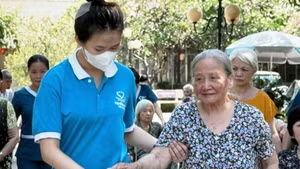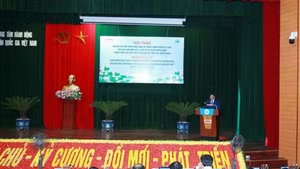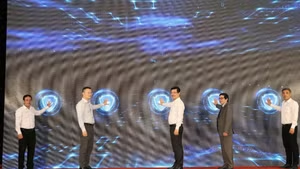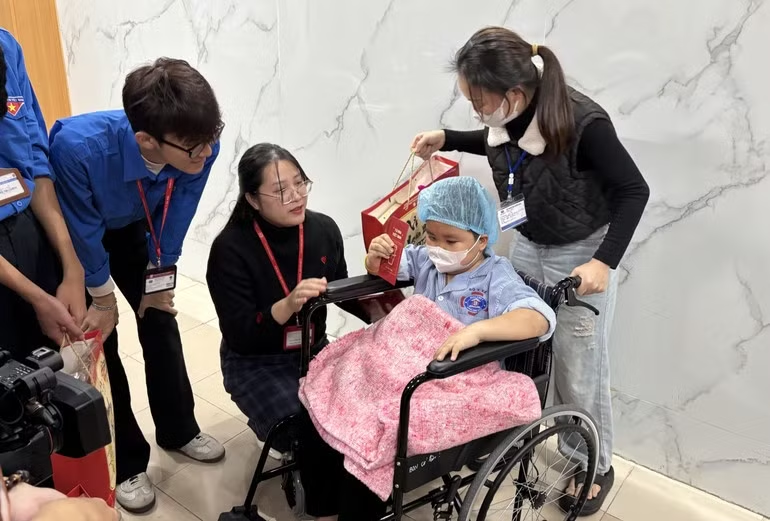
Over 900 gift packages, worth more than 200 million VND in total, along with 500 ‘banh chung’ (square sticky rice cakes) and red envelopes, were handed out by hospital leaders, youth volunteer union members, and many philanthropists to patients being treated at Ha Noi Medical University Hospital, K Hospital Tan Trieu, Ha Noi Psychiatric Hospital, dialysis patients, the homeless, and many others living in difficult circumstances.
For many undergoing long-term treatment, Tet is a sensitive time, when health worries intertwine with financial burdens and homesickness. Thus, these gifts offer spiritual encouragement, helping patients ease feelings of loneliness during Tet away from family.
Nguyen Ngoc Hoa, 57, from Phu Thuong Ward, Ha Noi, shared that she was diagnosed with lung cancer that had metastasised to bone at the end of March 2025. She is now receiving treatment at K Hospital and can barely work any more, while medical costs are extremely high.
These gifts offer spiritual encouragement, helping patients ease feelings of loneliness during Tet away from family.
“Treatment like mine costs a great deal. Right now, I can’t help my family with anything, so all chores fall to relatives. During treatment, I was told of this support, which made me very happy. I see this as a deeply humane activity, sharing with patients in hardship like us. I hope for more kind hearts to help those with serious illnesses,” Hoa said.
Sharing similar sentiments, Dang Quang Trinh, a colon cancer patient whose condition has metastasised to the lungs, from former Thai Binh Province, said he has been treated at K Hospital for nearly three years and is now on chemotherapy every 20 days.
“My family is also struggling. Thanks to hospital and sponsor support, I was notified today to collect a gift. This is huge encouragement for patients like us, giving more spirit and resolve to continue treatment,” Trinh shared.
Alongside gift-giving to patients, student volunteers hosted a fundraising event to rally community support for patients in the lead-up to Tet.
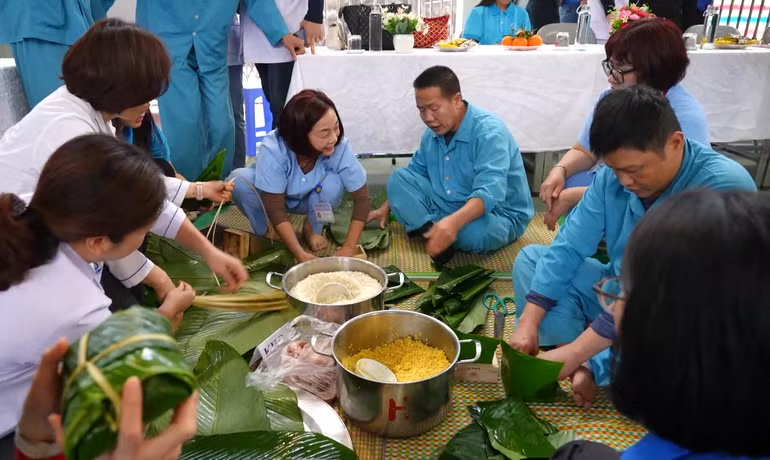
At Ha Noi Psychiatric Hospital, the Board of Directors and departments proactively organised activities like preparing sweets, fruits, and cultural performances for patients, and joined them in making ‘banh chung’.
“These activities help patients immerse themselves in the Tet atmosphere, feeling joy and warmth like at home. Among those staying at the hospital are many in very tough circumstances, on long-term treatment, with families unable to take them home for Tet. These patients receive close care from doctors and nurses,” Nguyen Thi Thanh Giang, a nurse at the hospital, shared.
According to Do Van Thang, Deputy Director of Ha Noi Psychiatric Hospital, for psychiatric patients – a vulnerable group – Tet holds special meaning. After treatment, some can return home, but many must stay due to unstable conditions or hardship.
“Every year, we strive to ensure patients have a joyful, warm Tet, easing their anxieties for better treatment peace of mind,” Thang shared.
From small gift packages and ‘banh chung’ to the sharing presence of doctors and students, “Tet for Patients” has become a bridge linking lecture halls to hospital beds, community to the less fortunate.
Over the years, the “Tet for Patients” programme has steadily expanded in scale and scope. If previous editions focused mainly on a few inpatient facilities, recent years have extended beyond to outpatients, dialysis patients, and the homeless.
This year marks the 10th consecutive year that Viet Nam-Japan Medical Cooperation Joint Stock Company (VJIIC) has partnered with the programme, providing support from spiritual encouragement gifts to material aid.
Nguyen Thi Tuyet Mai, Director of Viet Nam-Japan Medical Cooperation Joint Stock Company (VJIIC), said the company’s gifts, though modest, aim at encouragement – vital for patient spirits and motivation during treatment.
For medical students, each “Tet for Patients” season is a profound lesson. Le Tien Thanh, a volunteer student from Ha Noi Medical University, said by joining volunteer activities at hospitals, he felt more deeply the meaning of medicine and the disadvantages faced by struggling patients. “It makes me cherish my path more, striving to study, hone medical ethics, to better care for patients in future,” he shared.
From small gift packages and ‘banh chung’ to the sharing presence of doctors and students, “Tet for Patients” has become a bridge linking lecture halls to hospital beds, community to the less fortunate.
The programme not only brings a warm Tet to patients but also sows seeds of compassion, nurturing social responsibility in future generations of doctors.