Strengthening ties with key partners is a clear priority amid global security volatility and intensifying strategic competition, particularly as the conflict in the Middle East continues to disrupt the world economy.
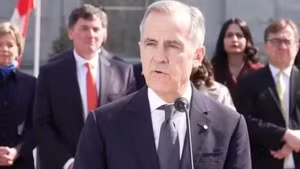
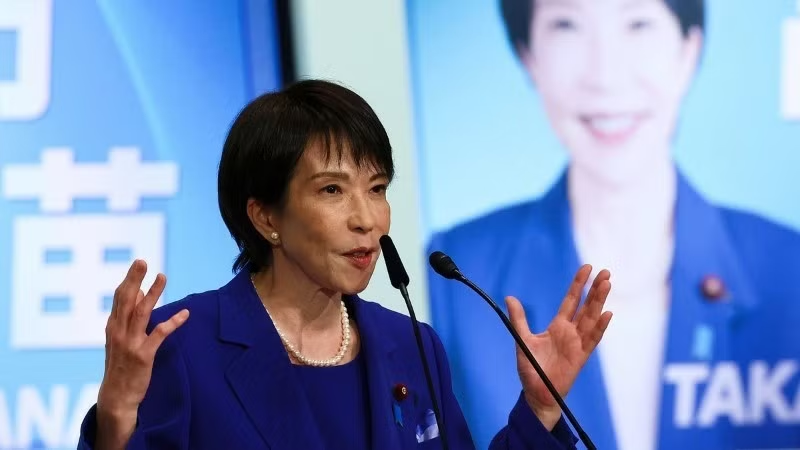
Prime Minister Takaichi Sanae’s first visit to the US since taking office comes as Japan’s economy faces significant consequences from the Middle East conflict.
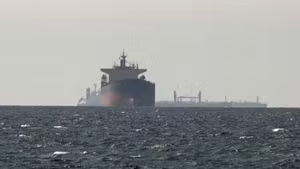
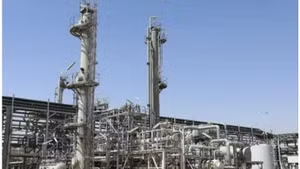
Several Japanese factories have announced cuts in ethylene production, highlighting the impact of disruptions to oil shipments through the Strait of Hormuz. Japan relies heavily on imported feedstock from the Middle East for its ethylene production.
During the visit, Japan is focusing on advancing trade agreements, expanding cooperation in developing critical minerals, and seeking US support for efforts to strengthen its defence capabilities.
However, Japanese media suggest that these issues may be overshadowed by developments related to Iran and the US-Japan alliance, which is facing a serious challenge.
Like many US allies, Japan is seen as caught in a dilemma as the conflict in the Middle East grows increasingly complex.
The situation places Japan in a delicate diplomatic position: it must maintain coordination with its US ally on security matters while avoiding being drawn into a distant conflict, something that would inevitably spark intense domestic debate.
Japan relies heavily on its alliance with the US to sustain its military deterrence, yet it also has deep interests in the Middle East. Heightened instability in the region poses a direct threat to Tokyo’s energy security.
Following US President Donald Trump’s call for countries to deploy military assets to the Middle East, several nations have responded cautiously and indicated they are weighing their options.
Takayuki Kobayashi, a senior adviser to the Japanese government, said Tokyo does not rule out the possibility of dispatching vessels, but given the ongoing conflict, such a move requires careful consideration.
Japanese media note that one scenario Prime Minister Takaichi Sanae may consider in order to maintain a balanced foreign policy regarding the Middle East conflict is to formally support a coalition of European, Gulf and Asian countries aimed at ensuring freedom of navigation in the Strait of Hormuz.
This coalition would remain separate from military operations while still coordinating with the US. The Prime Minister recently stated that the government would pursue a foreign policy that places national interests first.
Relations between Japan and the US have been significantly strengthened since Takaichi Sanae became the first female Prime Minister in Japanese history.
US President Donald Trump’s visit to Japan shortly after her inauguration, with numerous commitments to deepen economic and defence cooperation, is regarded as an initial success for the Japanese government in its first major foreign policy test.
Both sides also underscored their commitment to ushering in a new golden era in bilateral relations.
Deepening a close alliance with the US remains a strategic priority and a cornerstone of Japan’s security, as the regional and global security environment grows increasingly volatile.
Officials from both countries have expressed confidence that the US-Japan summit held during Prime Minister Takaichi Sanae’s visit will be successful, demonstrating the resilience of the alliance.