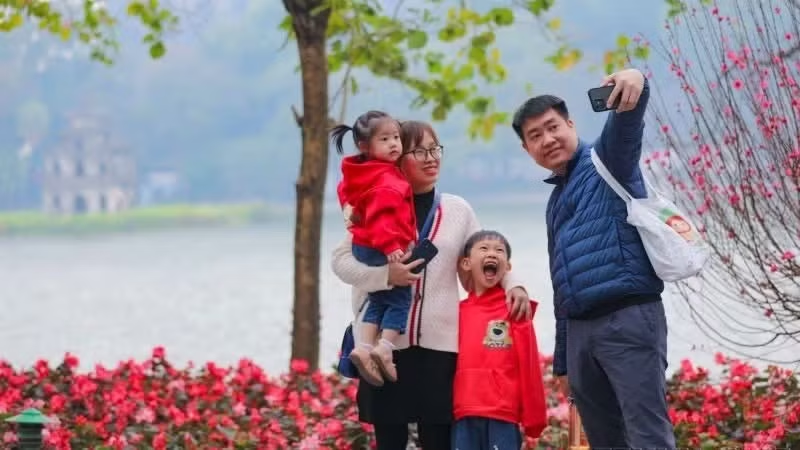
Throughout history, the family has remained the foundation of love, character formation, and the transmission of cultural values. Every happy family contributes to human development, improves the quality of the workforce, and strengthens the nation's internal resilience.
In modern society, the nuclear family has become increasingly common, with greater equality among family members, stronger respect for individual rights, and greater emphasis on shared responsibility in building family happiness.
At the same time, Vietnamese families face new challenges, including population ageing, declining birth rates in some localities, employment pressures, multicultural families, and rising divorce rates. Rapid advances in digital technology and social media are also reshaping family relationships.
In major cities, many parents have limited time to spend with their children, while young people are gaining access to the internet at an increasingly early age and spending much of their time online. Differences in values, lifestyles, and access to information have widened the generation gap.
Meanwhile, population ageing is changing family structures, with many elderly couples or older people living separately from their children. This has direct implications for elderly care and intergenerational bonds, prompting traditional family-based care to adapt through greater community support and social services.
Against the backdrop of rapid scientific and technological advances, family education has become more important than ever. Alongside preserving traditional values and selectively embracing new ones, families should focus on instilling moral standards, healthy lifestyles, and proper social behaviour in younger generations. Values such as love, mutual support, respect, and responsibility should be nurtured through coordinated efforts by families, schools, society, modern media, and digital platforms.
From a policy perspective, many localities have adopted new approaches to family affairs. Ha Noi, for example, issued Plan No. 112/KH-UBND on March 19, 2026, emphasising greater public awareness of the family's role in a rapidly urbanising and globally integrated capital. The plan promotes the application of information technology and digital transformation in family governance and domestic violence prevention, while also expanding digital communications on family culture and violence prevention.
Family governance is gradually shifting towards a data-driven approach that better anticipates people’s needs. To build a comprehensive database and improve family policies, relevant authorities need to continue studying changes in Vietnamese family structures and propose solutions that support comprehensive human development.
In the digital age, every family has a responsibility to guide children in using the internet and social media safely and responsibly while strengthening communication and mutual support among family members. Public authorities should continue harnessing digital technologies to disseminate knowledge on parenting, elderly care, domestic violence prevention, and cultural development. Society as a whole also plays a role in promoting appropriate online behaviour and preserving Vietnamese family values.
Politburo Resolution No. 80-NQ/TW on the development of Vietnamese culture identifies comprehensive human development based on the national value system, cultural value system, family value system, and standards of Vietnamese people. The family value system comprises four core values: prosperity, happiness, progressiveness, and civility. These values are closely interconnected and mutually reinforcing.
The positive values cultivated within families spread throughout communities and society. Strong families contribute to social stability, while individuals raised in healthy family environments become valuable assets for national development. Ultimately, the nation’s internal strength begins with the strength of every Vietnamese family.
With the theme “Happy Families – Prosperous Nation”, this year’s Vietnamese Family Day once again highlights and honours the indispensable role of the family in nurturing the virtues of the Vietnamese people and contributing to sustainable national development.