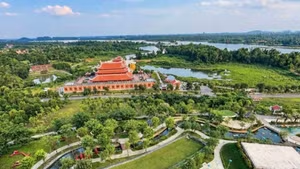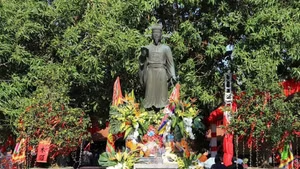
Voi Phuc Temple is located to the west of the ancient imperial citadel and represents the Western Guardian — one of the four sacred sites of the the Four Guardian Temples of Thang Long.
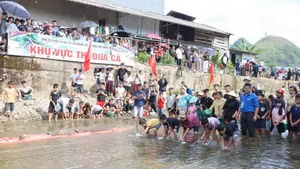
Each year, local residents organise a festival to commemorate the passing anniversary of the deity Prince Linh Lang on the 10th day of the second lunar month. This is a major occasion observed by hundreds of localities, among which the Voi Phuc Temple Festival is one of the most significant.
Many communities that worship him organise ceremonial processions to offer tributes to the deity Prince Linh Lang, particularly the three villages bound by traditional ties, including Thu Le, Hao Nam and Ngoc Khanh.
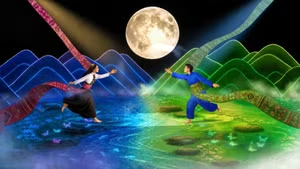
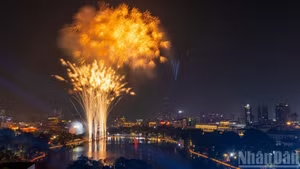
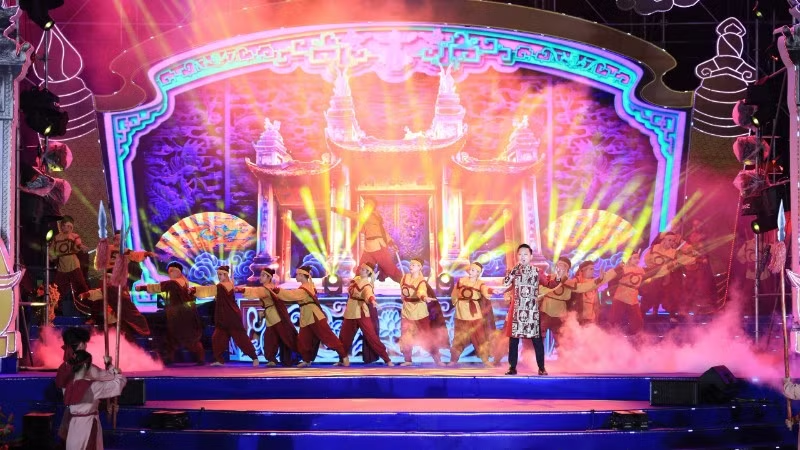
During the 2026 spring festival season, alongside traditional rituals, the People’s Committee of Giang Vo Ward, in coordination with relevant units, organised the artistic programme “Thang Long’s Heroic Spirit – Sacred Western Citadel” at the Special National Relic Site of Voi Phuc Temple on the evening of March 28.
Co Nhu Dung, Chairman of the People’s Committee of Giang Vo Ward, stated that the programme was held to implement Resolution No. 80-NQ/TW of the Politburo (13th tenure) on developing Vietnamese culture, as well as Action Programme No. 08-CTr/TU of the Ha Noi Party Committee on building and advancing an advanced Vietnamese culture imbued with national identity.
The programme aims to promote heritage values in connection with the development of cultural tourism and cultural industries, while fostering traditional education and reinforcing the identity and depth of Ha Noi’s thousand-year-old civilisation.
The event was staged in a semi-reality format, combining traditional performing arts with modern technologies such as lighting and sound to create a vivid, multi-dimensional artistic space.
Its performances were meticulously choreographed, blending folk and contemporary music, theatrical and cinematic elements, creating a seamless narrative flow from past to present. Scenes depicting the legends of the deity Prince Linh Lang, his heroic feats, and the cultural life of ancient Thang Long residents were conveyed through expressive and creative artistic language.