Bringing crafts into heritage spaces
The harmonious combination of preservation and creativity has helped generate momentum for sustainable community development and cultural tourism. In Ha Noi’s Old Quarter, spaces within several communal houses are increasingly being transformed into creative venues where traditional crafts are performed, experienced, and retold through the skilful hands and dedication of artisans.
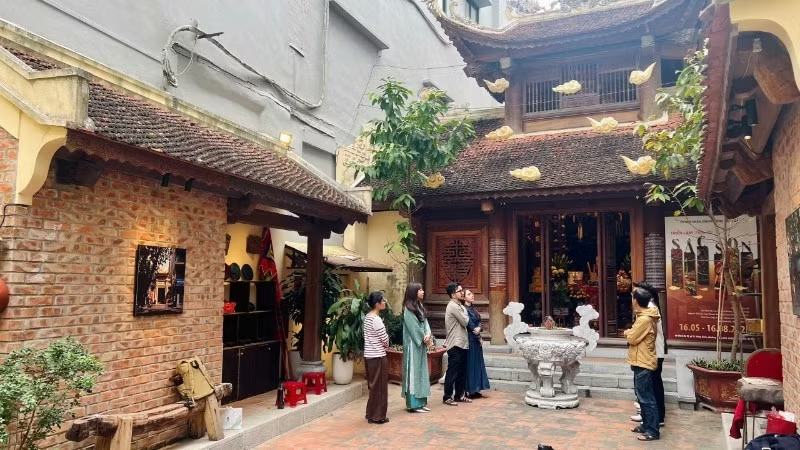
A notable example is Kim Ngan Communal House on Hang Bac Street — once a historic centre of silver carving— which has now been revitalised as an experiential craft space. Within its ancient setting of tiled roofs, wooden pillars, and traditional motifs, visitors, after touring the site, can directly observe each stage of intricate silver craftsmanship, from melting and shaping to detailed engraving. Workshops held here allow participants to create their own products, thereby gaining a deeper appreciation of the meticulousness and value of traditional crafts.
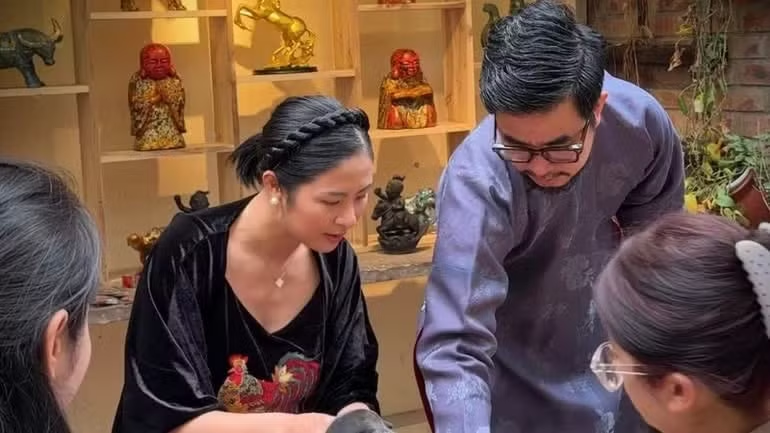
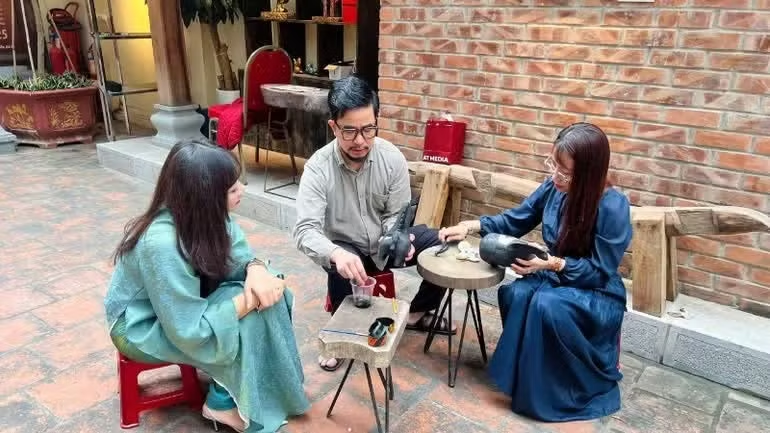
Similarly, at Ha Vi Communal House on Hang Hom Street, the traditional lacquer craft has been brought to life through exhibitions and hands-on activities. No longer static displays, lacquer products become vivid stories as visitors witness the multi-stage process, including coating, polishing, painting, and finishing.
In particular, workshops organised by Meritorious Artisan and painter Nguyen Tan Phat have attracted large numbers of young people and international visitors. Participants can try each stage, from material preparation to final production, thereby gaining a deeper understanding of both the techniques and cultural value of the craft.
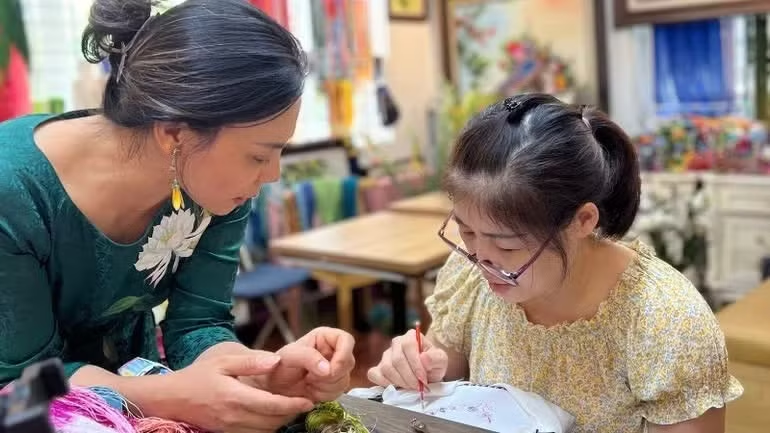
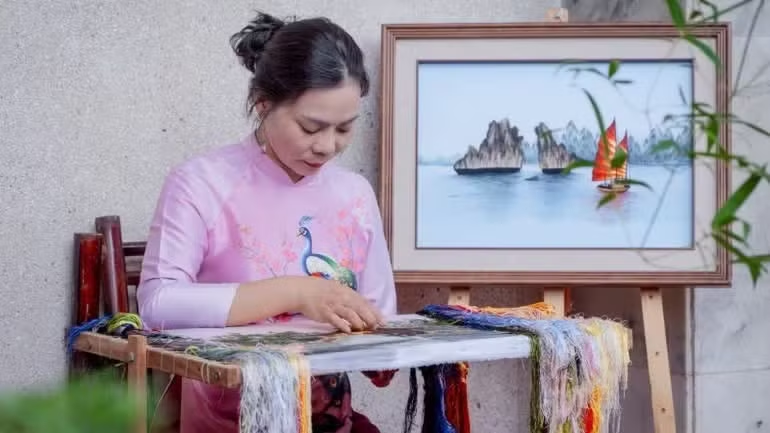
Creative craft spaces within heritage sites have also expanded to Tu Thi Communal House, which is home to the refined tradition of embroidery from the ancient Thang Long capital — now transformed into a distinctive cultural destination in the heart of the Old Quarter. Here, art projects and hand-embroidery workshops are regularly organised, turning the communal house into an open creative studio.
Visitors can directly handle needles and threads, practisingeach stitch and experiencing the delicacy embedded in every detail. The participation of contemporary artisans such as Nguyen Thi Hang has contributed to refreshing approaches to heritage. While preserving traditional techniques, they also innovate with patterns, materials, and modern artistic language, making embroidery more accessible to today’s public.
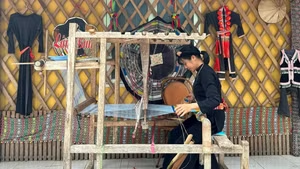
Beyond the Old Quarter, these models are spreading to traditional craft villages such as Bat Trang and Van Phuc, allowing visitors to engage in production processes ranging from pottery shaping and decorative painting to silk weaving and dyeing. This interaction brings traditional crafts—once perceived as distant—closer to life, making them more vivid and appealing, while heritage spaces are creatively adapted within appropriate limits.
Solutions for craft spaces
Preserving traditional crafts within heritage spaces presents a delicate balance between conservation and operation. Without appropriate organisation, the very values that need safeguarding may be damaged, diminished, or distorted under the pressure of limited space, growing visitor numbers, and increasing demand for interactive experiences. As a result, today’s craft spaces are seeking solutions that are flexible, creative, and sustainable.
According to experts in cultural and tourism development, one of the effective approaches is spatial layering. Core areas of heritage sites, such as Kim Ngan Communal House or Ha Vi Communal House, are kept largely intact, serving as spaces for storytelling, display, and symbolic performance.
Activities requiring high levels of interaction, such as hands-on practice, production, and workshops, are relocated to auxiliary spaces or nearby areas. This helps reduce pressure on heritage sites while allowing visitors to enjoy more complete experiences.
At Tu Thi Communal House, live embroidery sessions and the sharing of creative journeys by artisan Nguyen ThiHang enable the public to gain deeper insight into the craft. Similarly, at Ha Vi Communal House, artisan Nguyen Tan Phat not only demonstrates lacquer techniques but also shares his artistic inspirations, making the craft more vivid and accessible.
Alongside physical spaces, digital technology and virtual experiences are opening up new layers of engagement. Instead of observing the entire production process within confined spaces, visitors can explore complex stages through videos, 3D models, or virtual and augmented reality (VR/AR).
Ultimately, the human factor, particularly artisans, remains at the centre of craft spaces. Workshops for students, short-term experiential programmes, and exchange activities help younger generations engage with crafts in a natural way, transforming them from something distant into a creative pursuit and potential career path.
Intricate details of silver carving or lacquer work can be enlarged and explained visually without interfering with heritage structures, making the crafts more accessible, especially to younger generations. At the same time, virtual exhibitions, e-commerce platforms, and instructional videos help promote craft products and their stories to wider audiences, creating a cycle that links experience, memory, and consumption.
Despite the cultural and tourism benefits of integrating crafts into communal houses and temples, artisans still face numerous challenges. Heritage spaces are limited, preservation requirements are strict, and craft production often requires specific tools, materials, and environments— yet all must be managed without affecting architectural integrity or historical value.
Management of heritage sites and coordination with local authorities also impose constraints in terms of operating hours, visitor access, and safety. Artisans must strike a balance between transmitting their craft, organising experiences, and maintaining product quality, often with limited resources. This demands not only technical mastery but also creativity, adaptability, and perseverance to sustain their craft.
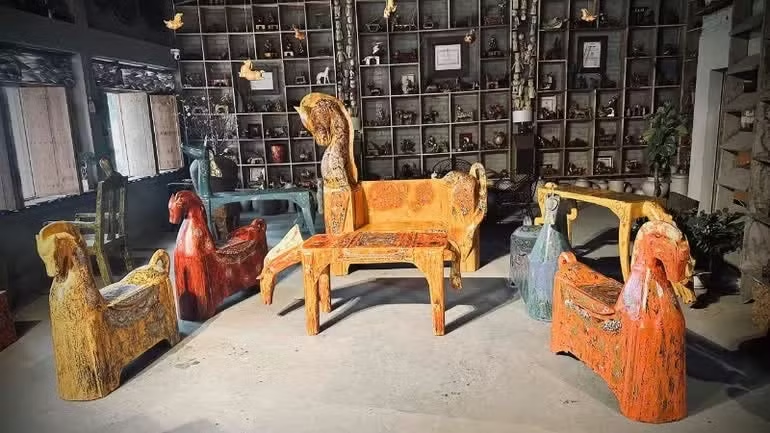
To ensure the continued development of traditional crafts in the digital age, the application of new technologies must go hand in hand with heritage preservation. Craft spaces can deploy 3D exhibitions, instructional videos, e-commerce platforms, and social media to showcase products without altering heritage structures. Workshops and experiential classes should be organised in auxiliary areas or outside core conservation zones to avoid damage or excessive pressure on heritage sites.
In addition, VR/AR applications simulating production processes, traditional techniques, and craft stories can provide immersive experiences while preserving the original state of heritage spaces. The integration of digitalisation and online communication also expands opportunities for education, exchange, and commerce, enabling artisans to reach broader audiences while safeguarding cultural, historical, and architectural values.
As Viet Nam’s tourism sector recovers, developing craft village tourism in Ha Noi requires balancing cultural and historical preservation with evolving experiential demands. According to Ha Van Sieu, Deputy Director General of the Viet Nam National Authority of Tourism, global trends are shifting from shopping-focused tourism to creative experiences rooted in local identity.
Digitising products, virtual exhibitions, instructional videos, and e-commerce platforms allow crafts to reach international visitors without affecting heritage spaces. Similarly, tourism development experts recommend models that combine local communities, storytelling skills, and digital technologies, helping craft villages become destinations for in-depth experiences where visitors can learn techniques, appreciate cultural values, and at the same time create opportunities for sustainable promotion and business.
Ultimately, the solutions for craft spaces do not lie in choosing between preservation and development, but in reorganising how crafts exist. When heritage sites are respected as cultural foundations, and traditional crafts are revitalised through creativity, technology, and people, craft spaces can truly thrive, evolve, and resonate within the modern urban landscape.