Under Government Decree No. 36 issued on May 29, 1995, which set out regulations for road traffic safety and urban order, the nation made a remarkable achievement: by 7 am on August 1, 1995, 62 inspection stations across the country began operating simultaneously. This rapid rollout showcased the sector’s strong political will and flexible execution in meeting new national mandates, laying the groundwork for a comprehensive network of motor vehicle inspection centres.
According to Deputy Director Nguyen To An, the past 30 years have marked a proud journey of transformation, driven by advancements in science and technology. The vehicle inspection network has undergone complete digitisation, featuring centralised data systems and specialised software. By 2001, the system had expanded to 78 inspection centers, all of which had been mechanised and modernised.
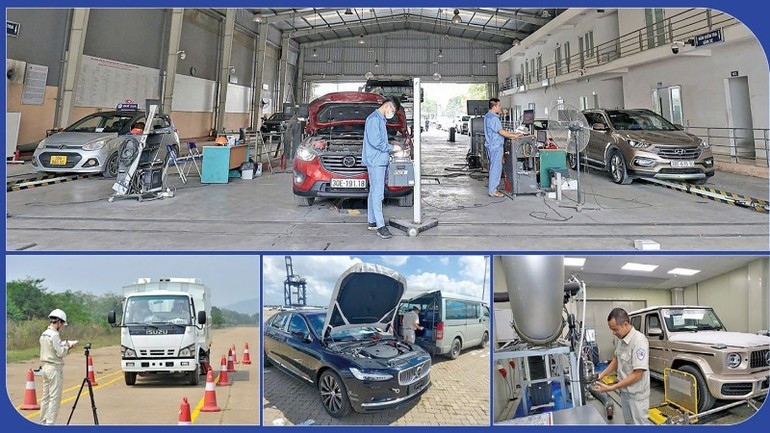
Viet Nam’s global integration in this field took a significant step forward in 2003 when it officially joined the International Motor Vehicle Inspection Committee (CITA). In 2006, the Viet Nam Register hosted the 12th CITA General Assembly and Annual Conference in Ha Noi — a major event in the international inspection community.
Today, Viet Nam is an active member of CITA and currently serves as Chair of the CITA Asia–Australia Regional Advisory Group, underlining the country’s growing influence and leadership in the global vehicle inspection arena.
In the environmental sector, emission control for in-use vehicles was first implemented in 2006 and expanded nationwide by 2008. The upcoming plan to launch emission inspections for motorcycles and mopeds further demonstrates the vehicle inspection sector’s ongoing commitment to promoting a sustainable and environmentally friendly living environment.

Over the past 30 years of establishment and development, the Viet Nam Register has grown into a professional, modern, and interconnected system that provides extensive services nationwide. The system now includes specialised departments under the Viet Nam Register, operational vehicle inspection centres, and 1,920 vehicle and specialised motorbike inspectors out of a total of more than 2,000 inspectors working in the field of road motor vehicle inspection.
Currently, the system's inspection capacity is sufficient to meet nationwide demand, conducting over 5 million vehicle inspections annually. It also evaluates hundreds of manufacturing facilities, issues thousands of test reports for vehicles, components, and spare parts, and certifies hundreds of thousands of imported vehicles.
Each year, the inspection process identifies hundreds of thousands of vehicles that fail to meet required standards, significantly contributing to ensuring technical safety, environmental protection, and reducing traffic accidents caused by technical failures. These efforts underline the Viet Nam Register’s vital role as the “silent gatekeeper” safeguarding the lives and assets of citizens and businesses.

Speaking at the anniversary ceremony, Nguyen Chien Thang, Director General of the Viet Nam Register, stated that in the coming time, the inspection sector would continue to undergo comprehensive reform, aiming for sustainable development. A key focus will be restructuring the organisational model, separating the State management functions from technical service provision.
The Viet Nam Register will continue to research and improve the legal framework with a people- and business-centred approach, ensuring effective state governance while creating optimal conditions for economic activity.
The agency also plans to study and adapt international vehicle inspection models to fit Viet Nam’s context, especially ensuring that motor vehicle inspection services are developed appropriately and competitively.
Furthermore, there will be a strong push toward the application of science and technology, digital transformation, and artificial intelligence (AI) in inspection activities. The agency will work on developing appropriate policies to encourage the establishment of international-standard inspection centers capable of testing electric vehicles, loaded-mode brake tests, emission control, and more.
The leadership emphasised that the vehicle inspection system would align with Viet Nam's green and sustainable development goals, particularly in emissions control and promotion of green, clean energy vehicles. With the motto "serving people and businesses at the centre", the inspection system must continue to carry out deeper reforms, enhance transparency, and improve public service delivery.
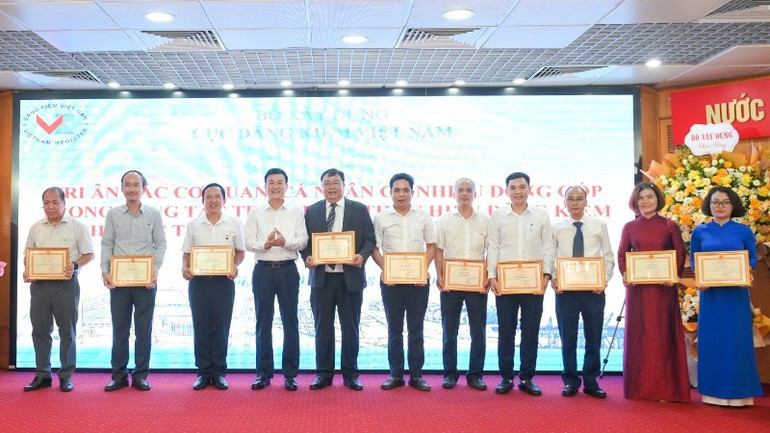
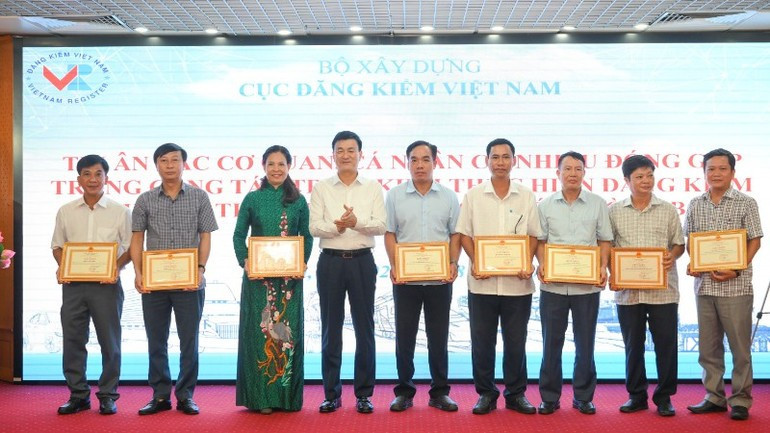
At the ceremony, the Viet Nam Register presented commendation certificates to individuals and collectives for their significant contributions to the development of road motor vehicle inspection over the past 30 years.