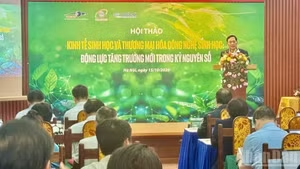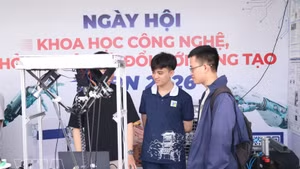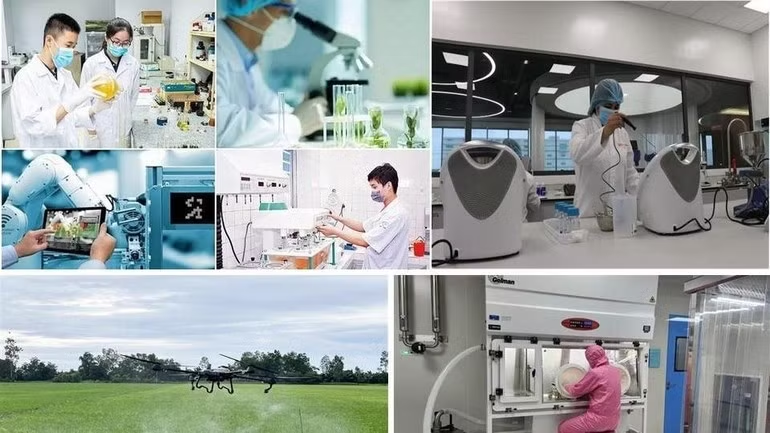
This outcome affirms the correctness of the national policy to build development on the foundations of science, technology, and innovation.
Consolidating position in global innovation rankings
According to the GII 2025, Viet Nam continues to rank among the top 50 countries with the world’s leading innovation ecosystems.
Notably, Viet Nam is recognised as one of nine middle-income countries (alongside China, India, Turkey, the Philippines, Indonesia, Morocco, Albania, and Iran) that have improved their ranking the fastest since 2013, and one of only two countries to maintain innovation performance above its development level for 15 consecutive years.
Viet Nam also belongs to the group of three countries with the fastest labour productivity growth rate in the 2014–2024 period, together with China and Ethiopia.
Viet Nam has made significant progress in refining institutions, enhancing scientific and technological human resources, increasing investment in research and development, expanding digital infrastructure, and fostering innovative enterprises.
In the index components, Viet Nam’s innovation input sub-index improved markedly, rising three places from 2023 to 50th in 2025.
This reflects progress in perfecting institutions, strengthening scientific and technological human resources, boosting investment in research and development, expanding digital infrastructure, and supporting innovative enterprises.
Meanwhile, innovation outputs remain at a high level, underscoring steady growth in converting scientific knowledge into products, technologies, and economic value.
Within ASEAN, Viet Nam has surpassed Thailand, rising to third place, behind only Singapore and Malaysia.
Among the 37 economies in the lower middle-income group, Viet Nam ranked second after India, which was placed 38th, demonstrating persistent efforts to narrow the development gap through science, technology, and innovation.
Framework of Indicators guides future investment priorities
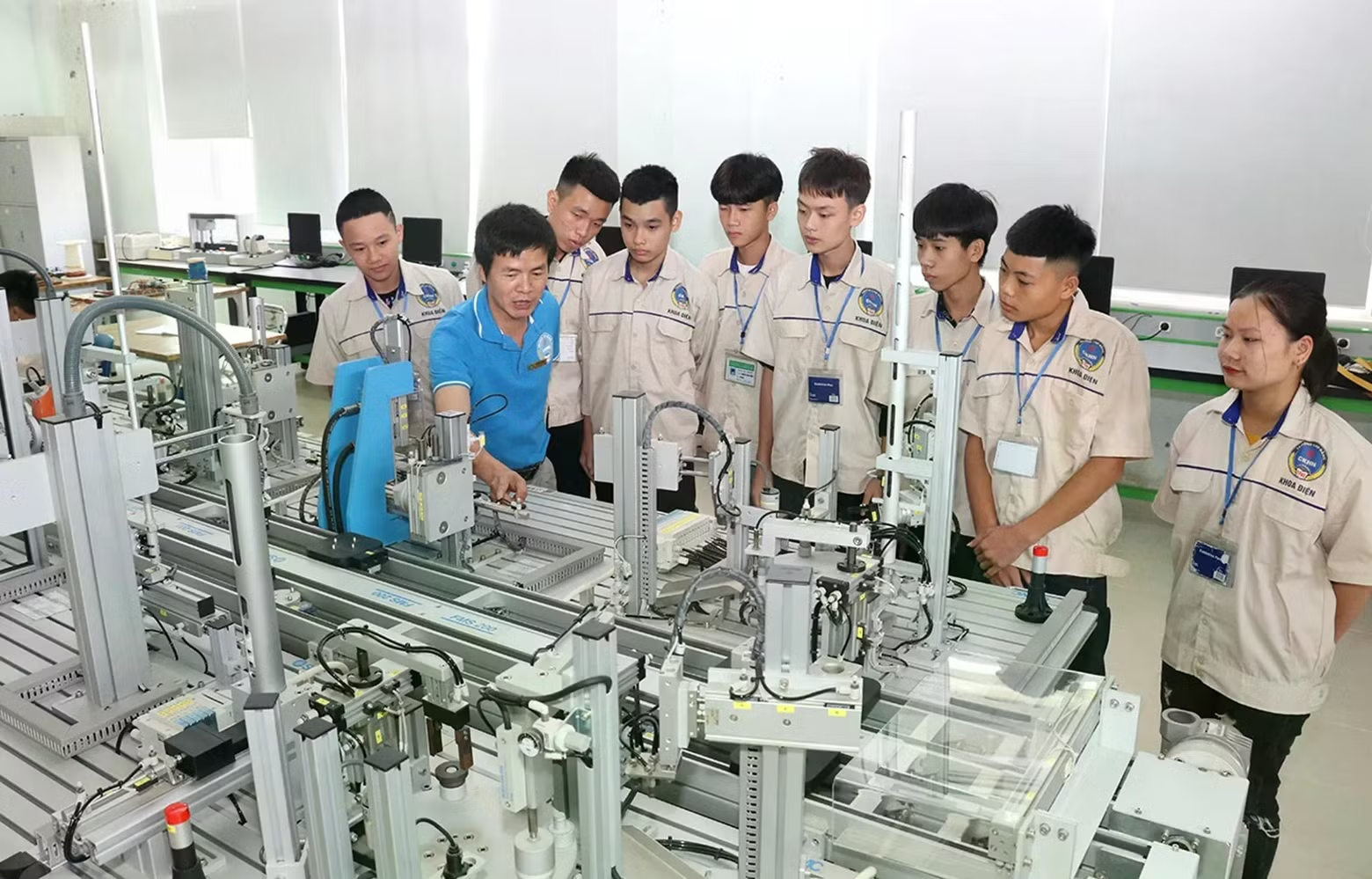
Following the release of the GII 2025 report, the Ministry of Science and Technology issued a Framework of Indicators to monitor and evaluate national scientific, technological, and innovation potential and capacity.
This is a timely step, clearly demonstrating the effort to realise Politburo Resolution No. 57-NQ/TW on breakthroughs in science, technology, innovation, and national digital transformation.
The Framework of Indicators is built on selectively chosen indicators from the GII set and scientific fields ranked by SCImago, ensuring international comparability, transparent measurement methods, and official data sources.
Its structure comprises two components: assessment of potential and assessment of scientific, technological, and innovation capacity, comprehensively reflecting everything from human resources, R&D investment, and university capabilities to creative start-up activities and venture capital investment.
The achievements in GII 2025, together with the synchronous implementation of Resolution 57-NQ/TW, demonstrate that science, technology, and innovation are gradually becoming the key driving forces for rapid and sustainable growth.
The issuance of the national Framework of Indicators not only serves monitoring and evaluation purposes but also acts as a policy orientation tool, enabling Viet Nam to systematically compare with upper-middle-income countries and clearly identify the pillars requiring priority investment in the coming period.
The achievements in GII 2025, together with the synchronous implementation of Resolution 57-NQ/TW, demonstrate that science, technology, and innovation are gradually becoming the key driving forces for rapid and sustainable growth.
This provides an important foundation for Viet Nam to realise its national development goals in the new era, moving towards becoming a developed, high-income nation by 2045.