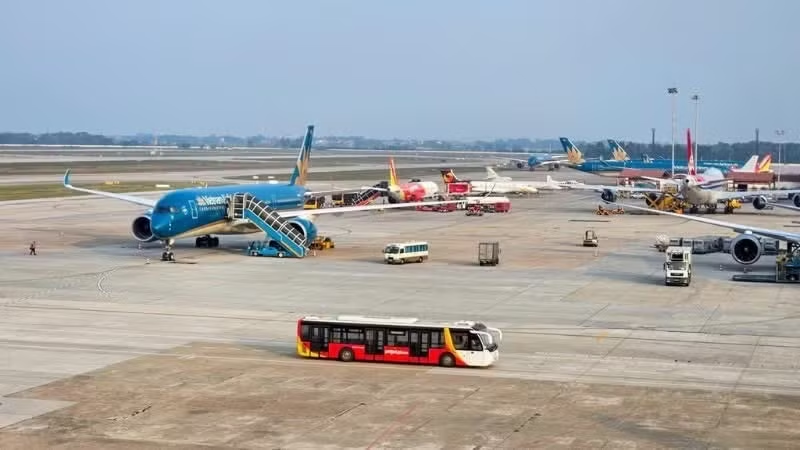
Under Decision No. 1140/QD-BXD, signed by Deputy Minister of Construction Le Anh Tuan, the revised plan seeks to optimise the country's airport network, align it with key economic corridors and improve multimodal transport connectivity.
Viet Nam aims to operate a network of 36 airports by 2030, comprising 19 international and 17 domestic facilities.
Looking ahead to 2050, the network is expected to expand to 37 airports, including 20 international and 17 domestic airports. A key feature of the long-term strategy is the development of a second airport for the capital region, complementing Noi Bai International Airport to accommodate rising demand in northern Viet Nam and create a more modern and integrated aviation network.
The revised plan also prioritises the development of air cargo logistics hubs at airports handling at least 250,000 tonnes of freight annually. Major logistics centres are planned for the capital region, Ho Chi Minh City, Long Thanh, Can Tho and Chu Lai to strengthen multimodal freight transport.
In addition, the Government will promote large-scale aircraft maintenance, repair and overhaul (MRO) centres at airports with favourable infrastructure and international flight networks, including Noi Bai, Tan Son Nhat, Long Thanh and Gia Binh.







![[Video] Resolution No. 10 repositions FDI in Viet Nam's new development strategy](https://en-cdn.nhandan.vn/images/5992a12dd6e78b9bfb434962ff1830731c3ef6c1538d722fbb2593b0fa31ecfea73ea406e335bb4f889623e75863a3fa5de1ba084f5b1db0b5788c84a44f1d4c/anh-dai-dien.jpg.avif)