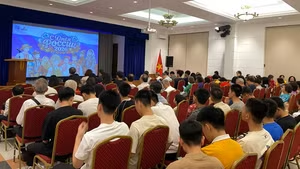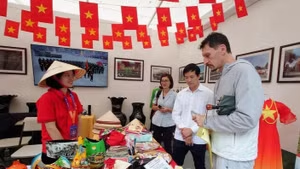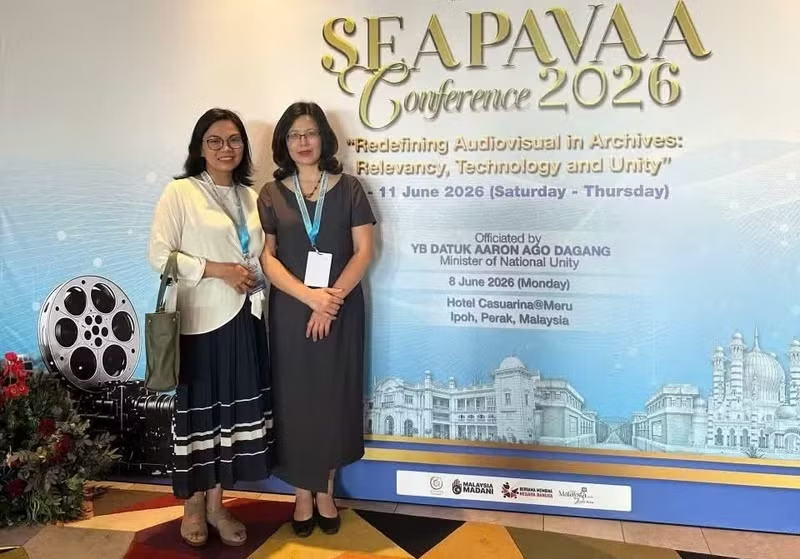
The 30th SEAPAVAA Annual Conference, which opened in Ipoh, Malaysia on June 7, served as an international bridge bringing together leading experts to tackle the challenge of safeguarding cinematic treasures against the ravages of time. The delegation from the Viet Nam Film Institute, led by Director Le Thi Ha, made a strong impression by showcasing the institute’s remarkable progress and capabilities in digitising moving-image archives.
SEAPAVAA is the most important annual international forum of the Southeast Asia-Pacific Audiovisual Archive Association. Established in 1996 in Manila, the Philippines, the association now connects more than 84 institutional and individual members from 24 countries worldwide.
It serves as a gathering point for national archives, libraries, museums, television broadcasters, universities and leading experts to discuss and seek solutions to the challenges of preserving audiovisual heritage, including film reels, videotapes and sound recordings. The conference is held annually on a rotating basis among member countries in Southeast Asia, Australia, New Zealand and the Pacific island nations.
The 30th SEAPAVAA Annual Conference in Malaysia underscored the scale and growing influence of the association, attracting a large number of scholars and representatives from heritage preservation organisations, film institutes, broadcasters and national libraries around the world. Participating countries and territories were grouped into strategic regional blocs. The ASEAN bloc comprised Viet Nam, Malaysia (the host nation), Thailand, Indonesia, the Philippines, Singapore, Laos, Cambodia, Myanmar and Brunei. The Oceania region included Australia, New Zealand, Fiji, Papua New Guinea, Samoa and New Caledonia. Extended members included Japan, the Republic of Korea, China, Taiwan (China), the US, the UK, Germany and Switzerland.
The Viet Nam Film Institute, under the Ministry of Culture, Sports and Tourism, is one of the association’s founding members and participates as a Full Institutional Member. Within ASEAN, Viet Nam is highly regarded for its professional expertise, owing to its extensive collection of historical film archives and restoration and digitisation technologies that meet regional standards.
The institute’s strong reputation has been reinforced through its significant contributions, particularly in sharing experience in digitisation and restoration. With an archive of more than 80,000 film reels, the institute has regularly brought valuable practical lessons to the conference on converting films into high-resolution digital formats, including 2K and 4K. It has also emerged as a regional leader through its successful restoration of numerous invaluable historical documentaries and revolutionary films.
Viet Nam has also established itself as a respected host nation, having been entrusted by SEAPAVAA to organise the association’s general conference on four occasions: in 1998 and 2004 in Ha Noi, in 2012 in Ho Chi Minh City under the theme of establishing digital archives, and in 2021 through an online conference hosted from Ha Noi amid the COVID-19 pandemic.
As a full member contributing annual membership fees, Viet Nam has actively participated in shaping the association’s strategic direction. The country has the right to attend General Assembly meetings, vote in elections for the Executive Council, approve the charter and contribute to decisions on common archival technology strategies for the region.
At this year’s conference, the Viet Nam Film Institute delegation, led by Director Le Thi Ha, actively participated in discussions and received widespread praise from international colleagues. The delegation not only reaffirmed Viet Nam’s standing as a highly respected founding member but also demonstrated its outstanding professional capabilities.
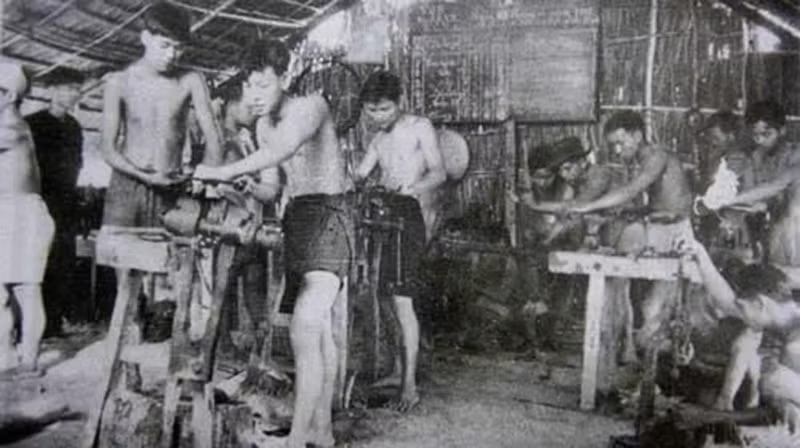
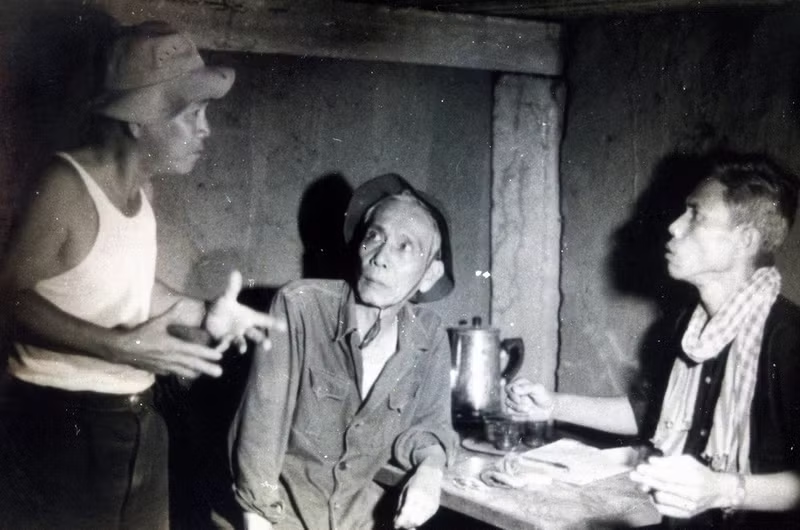
One of the most memorable moments came during the cultural exchange programme titled Archival Gems Screening. The Vietnamese delegation presented an invaluable cinematic treasure from the nation’s resistance war against French colonialism: the rare documentary “Cong Binh Xuong Khu 8” (Military Engineering Workshop of Zone 8) by the late veteran filmmaker Khuong Me.
This unique and rare documentary not only recreates a difficult yet heroic chapter in history and the resilience of Vietnamese soldiers and civilians in the southern resistance base, but also holds immense value as a piece of cinematic heritage. The successful preservation, restoration and digitisation of the film by the Viet Nam Film Institute earned the admiration of international archival experts. It once again demonstrated Viet Nam’s technological capabilities, which are increasingly aligned with international standards, while also reflecting the dedication and vision of those committed to preserving humanity’s audiovisual memory.
The 30th SEAPAVAA Conference was distinguished not only by agreements and advanced digitisation technologies but also by the mutual understanding and deep appreciation that participating nations showed towards one another’s heritage. The success of the Viet Nam Film Institute delegation once again demonstrated that Viet Nam is making significant strides in the region’s archival technology landscape.
The successful restoration and screening of classic works such as Cong Binh Xuong Khu 8 by director Khuong Me provide clear evidence of Viet Nam’s ability to digitise archival materials to 2K and 4K standards from a national collection of more than 80,000 film reels.
From its role as a responsible founding member to that of a guardian of historical memory, Vietnamese cinema has shown that it not only preserves the past through modern technology, but also uses that heritage to engage confidently with the world, shine on the international stage and touch the hearts of global audiences in the shared mission of safeguarding humanity’s audiovisual heritage.