Results of restoration efforts
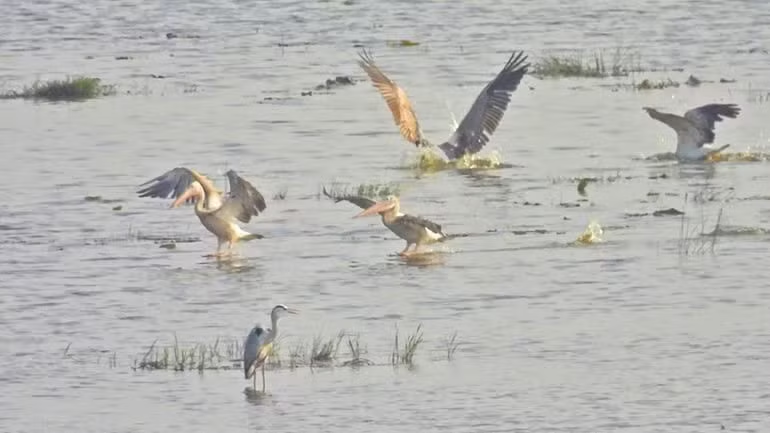
In early April, a flock of spot-billed pelicans reappeared at the park after six years of absence, which is welcome news for conservationists. The birds have been frequently observed in Zone A1, the park’s strictly protected section, as well as in several other areas.
According to WWF-Viet Nam, the pelicans’ return is a positive sign that the park’s ecological landscape is recovering well.
Other species, including black-winged stilts, knob-billed ducks, cotton pygmy geese, painted storks, and numerous migratory birds, have also chosen Tram Chim National Park as a stopover or breeding ground. Notably, in 2024, the park recorded the return of seven sarus cranes, an encouraging sign for the species’ conservation and recovery programme.
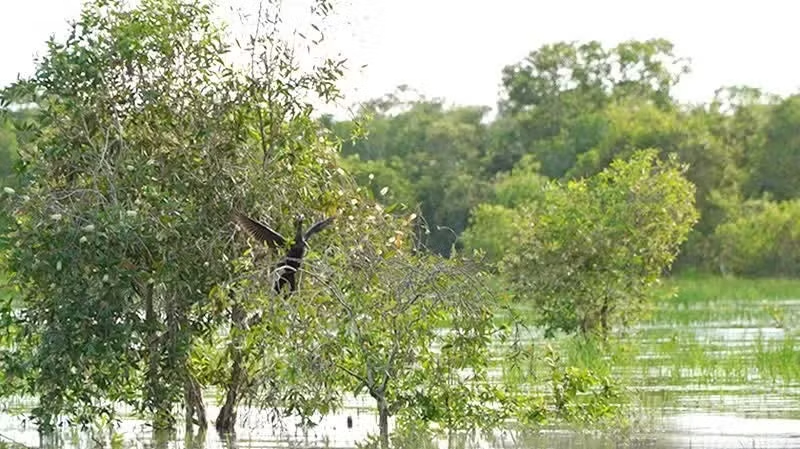
The aquatic ecosystem has also improved noticeably. During the recent flood season, aquatic plants native to the Dong Thap Muoi region, including Utricularia punctata, Utricularia aurea, and white water lilies, have reappeared in greater abundance.
In recent years, habitat restoration efforts at the park have been stepped up. Measures have included clearing dense ground vegetation and ploughing to create more open space and improve visibility; constructing gently sloping ponds rich in fish and shrimp to support bird foraging; and building raised earthen mounds to provide resting areas where birds can rest and scan their surroundings.
Measures have included clearing dense ground vegetation and ploughing to create more open space and improve visibility, forming gently sloping ponds rich in fish and shrimp to support bird foraging, and building raised earthen mounds to provide resting areas where birds can sunbathe and keep watch.
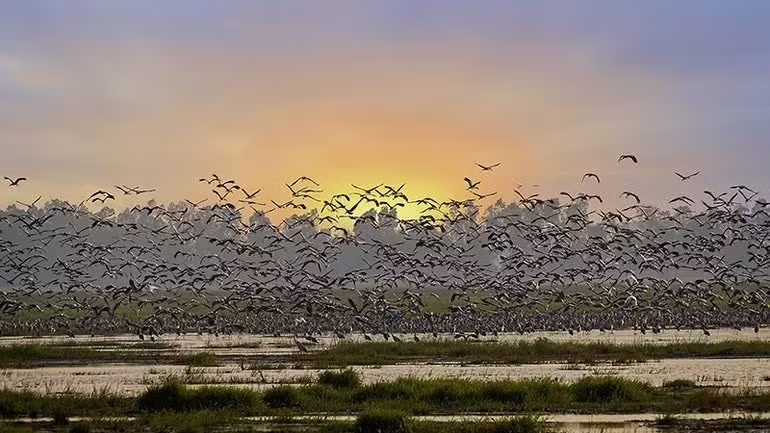
Doan Van Nhanh, Deputy Director of the Centre for Conservation and International Cooperation at Tram Chim National Park, noted that thanks to the conservation efforts of communities in the buffer zone, birds have gradually returned in growing numbers.
This demonstrates the effectiveness of habitat restoration and ecosystem conservation efforts. Close coordination among management authorities, international organisations and local communities has yielded positive conservation outcomes.
Sustainable solutions
Tram Chim National Park is a prime example of wetland ecology in the Dong Thap Muoi region. With a core area of 7,313 hectares, it is one of the most ecologically significant sites in the region. Its ecosystem encompasses seasonally flooded grasslands, native plant species such as purple spikerush and wild rice, and melaleuca forests, forming an ideal habitat for waterbirds to nest and forage.
The restoration of the ecosystem at Tram Chim, a recognised Ramsar wetland site, carries not only scientific significance but also substantial cultural and spiritual value.
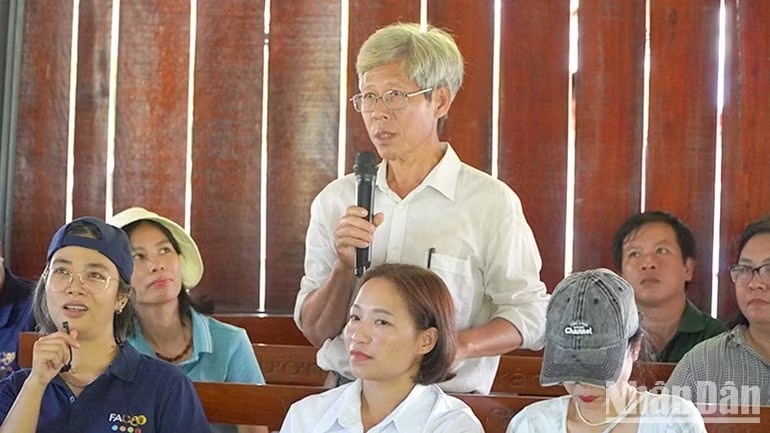
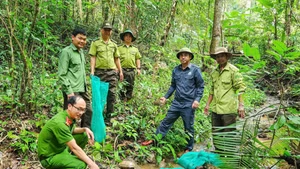
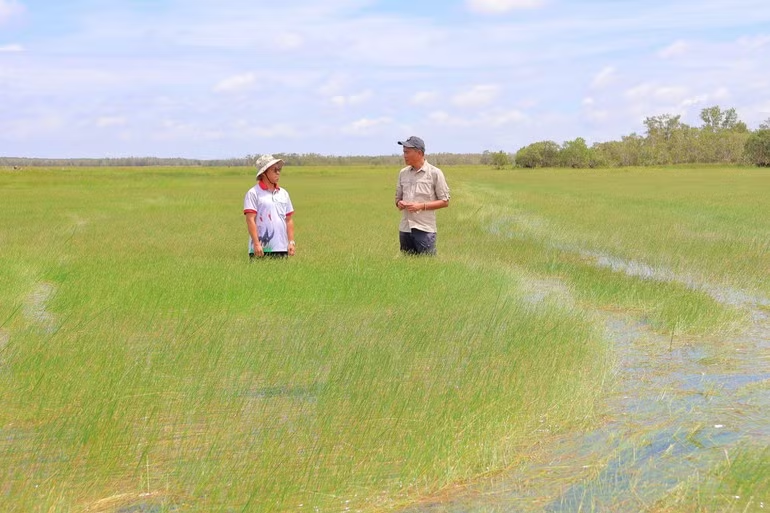
Reflecting on more than two years of restoration work, Nhanh stated: “Over the past two years, through a range of coordinated solutions, we have restored nearly 100 hectares of purple spikerush grassland in the core zone of the park. This provides an important foundation for securing natural food sources favoured by sarus cranes.”
To achieve these results, the park has applied a range of scientific measures. Controlled burning was first carried out to remove thick layers of vegetation, followed by ploughing to create favourable conditions for purple spikerush growth, with soil pH levels monitored throughout.
However, the most critical factor has been the appropriate regulation of water levels in line with seasonal conditions. In previous years, the ecosystem had been disrupted by poor water management. Alongside the recovery of purple spikerush grasslands, the melaleuca forest ecosystem is also regenerating vigorously. In Zone A1, where a fire occurred in June 2024, numerous young melaleuca trees are now growing vigorously beside charred trunks.
Changes in the park’s native vegetation indicate that water management is now on the right track, enabling indigenous plant species to regenerate and thrive naturally.
The park has identified adaptive, nature-aligned water management as a key priority. According to Bui Thanh Phong, Deputy Director of Tram Chim National Park, future plans, guided by scientific recommendations, will continue to focus on regulating water levels appropriately to support biodiversity.
In a concerted effort to restore and protect the original ecosystem of the Dong Thap Muoi region, Dong Thap provincial authorities, together with communities, businesses, and social organisations, have joined forces to conserve this “green lung” of the region.
At Tram Chim National Park, WWF-Viet Nam, in coordination with the provincial Department of Agriculture and Environment, has officially launched Phase 2 of a project on nature-based solutions for climate change adaptation in the Mekong Delta, covering several provinces including Dong Thap. The launch marked an important transition from pilot initiatives to scaling up nature-based adaptation models.
During Phase 1, several “living with floods” livelihood models were piloted. Results showed that combining ecosystem restoration with economic development is fully feasible, with these models helping wetlands regenerate naturally.
Phase 2, scheduled to run until 2029, will focus on expanding proven models and restoring wetland ecosystems at a landscape scale. Priority will be given to supporting vulnerable communities in the buffer zones of Lang Sen Wetland Reserve and Tram Chim National Park.
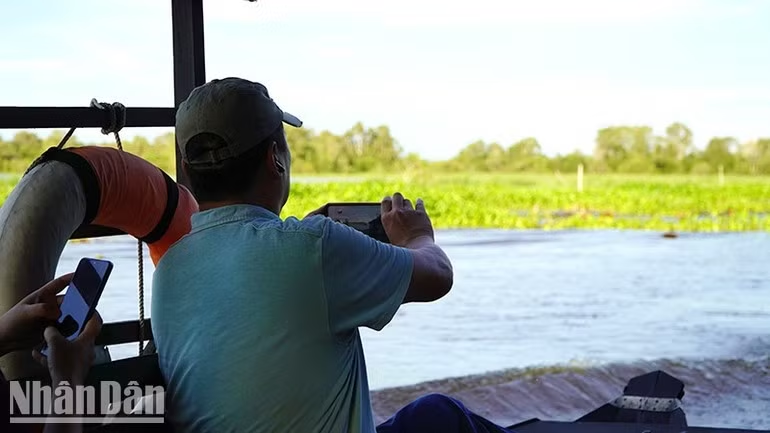
Dong Thap Province is currently facing significant challenges from climate change, which directly affect production and livelihoods. In this context, a nature-based development approach has been identified as an essential and long-term direction.
Nguyen Phuoc Thien, Vice Chairman of the Dong Thap Provincial People’s Committee, stated that the project not only delivers practical technical benefits but also enhances community resilience, particularly for those most directly affected by climate change. At the same time, it demonstrates an integrated approach linking conservation with development, and livelihoods with ecosystems.