At the Asia Zero Emission Community (AZEC) Plus online Summit, Prime Minister Le Minh Hung emphasised that renewable energy development and green transition are strategic priorities in the coming period.
This consistent direction reflects Viet Nam’s determination to balance economic growth with environmental protection. In recent years, the country has made notable progress in clean energy development, particularly in wind and solar power. At the same time, the Government has accelerated institutional reforms, developed a domestic carbon market and gradually established emissions pricing mechanisms.
International cooperation programmes, such as the Just Energy Transition Partnership, continue to play a key role in mobilising financial resources and facilitating technology transfer. Efforts to review and update nationally determined contributions and green growth strategies also demonstrate a sustained commitment to improving policy quality.
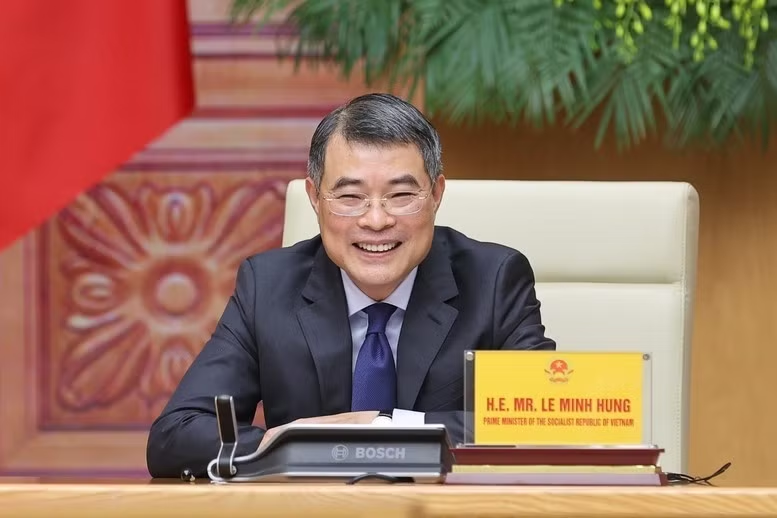
Prime Minister Le Minh Hung attends the Asia Zero Emission Community (AZEC) plus online summit on energy autonomy, chaired by Japanese Prime Minister Takaichi Sanae. (Photo: VGP/Nhat Bac)
Beyond the public sector, the energy transition is rapidly spreading across businesses, which are seen as central to determining both the pace and effectiveness of achieving Net Zero.
Sustainable transition opens new growth opportunities
In the current context, digital transformation and innovation are becoming critical drivers helping businesses adapt to sustainable development requirements. Le Hong Quang, General Director of MISA Joint Stock Company, said: “As artificial intelligence advances rapidly, we have shifted from providing traditional software to building self-operating enterprise platforms that integrate human and digital labour, thereby enhancing productivity and moving towards sustainable growth.”
According to Quang, applying AI not only optimises production efficiency but also reduces resource consumption, indirectly contributing to emissions reduction. This demonstrates that digital and green transitions are closely interconnected within a long-term development strategy.
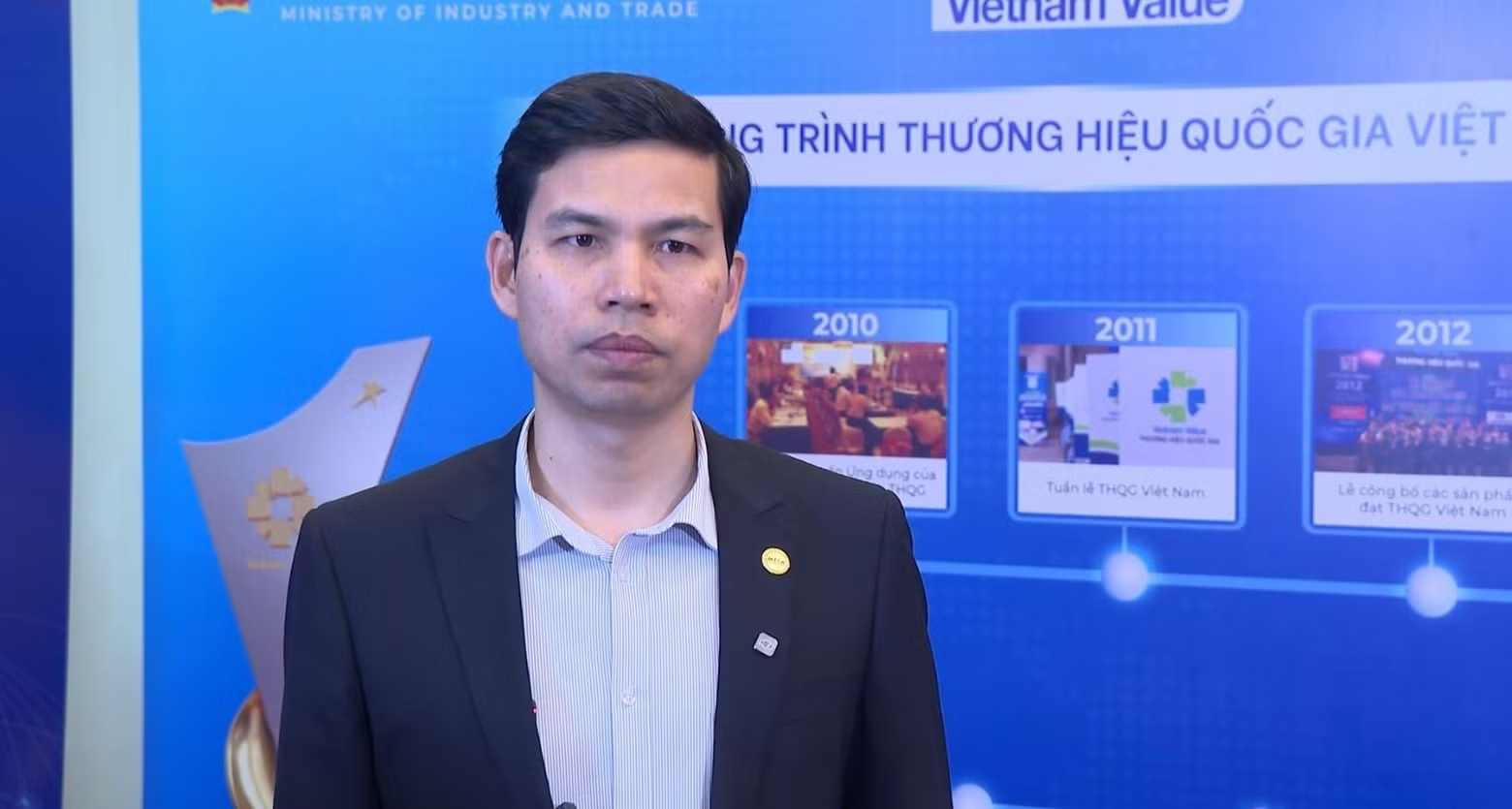
Le Hong Quang, General Director of MISA Joint Stock Company. (Photo: Do Bao)
From a manufacturing perspective, Tran Dinh Tai, Acting Deputy General Director of Hoa Sen Group, emphasised that the company remains committed to sustainable development through technological investment, product quality improvement and production optimisation. Continuous upgrades to production lines and efficiency improvements not only enhance competitiveness but also reduce environmental emissions.
Meanwhile, Thai Nhu Hiep, Chairman and General Director of Vinh Hiep Company, stressed that sustainability must be viewed as a continuous responsibility. “Enterprises need to build transparent production ecosystems, from raw material areas to processing and traceability. This is essential for enhancing product value and meeting international environmental and emissions standards,” he said.

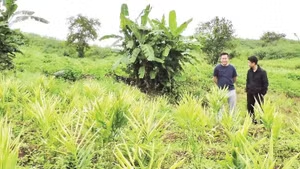
Developing green value chains is an inevitable trend in modern agricultural transformation. (Photo: nhandan.vn)
Aligning policies to unlock resources
Experts believe the 2026–2030 period will be pivotal as Viet Nam shifts from commitments to concrete actions. Climate technology is expected to play a central role, including clean energy, the circular economy, low-emission agriculture and green transport.
These sectors not only help reduce greenhouse gas emissions but also open new growth avenues. Small and medium-sized enterprises, along with start-up ecosystems, are playing an increasingly important role thanks to their flexibility and innovative capacity.
However, significant barriers remain, particularly in terms of capital, technology and implementation capacity. High initial investment costs and technological risks continue to make some businesses hesitant.
To accelerate the energy transition effectively, coordinated efforts among the Government, businesses and international partners are essential. Vu Ba Phu, Director General of the Trade Promotion Agency, said future strategies will focus on digital transformation, innovation and green growth.
The National Brand Programme will continue supporting businesses in enhancing competitiveness and pursuing sustainable development. In addition, developing green finance instruments, promoting the carbon market and integrating climate goals into fiscal policy are seen as key solutions—serving not only as economic regulatory tools but also as strong incentives for businesses to engage in emissions reduction.




![[In Pictures] Bridge columns and underpasses in Ha Noi begin to turn green](https://en-cdn.nhandan.vn/images/nyM650OGFWrOVWc-xajqN-rTZ68Rlmc1fiGJOhBRYHH_N-Xs0TE8Psnfce7ORTs-KVfoJaEblqjNufFrgeF3e2xFkGtLQVaXm04VcmMKBEkANUyiOkpz4zAuIKgydVrrfBxmGez0E_YJIag0u_Uil0E7jpuJXsIxeMmGjoY1-W4/1791863309074-2994714492692222878-2994714492692222878-adb9ff3f4175c70066ed8bb80cfbead9.jpg.avif)