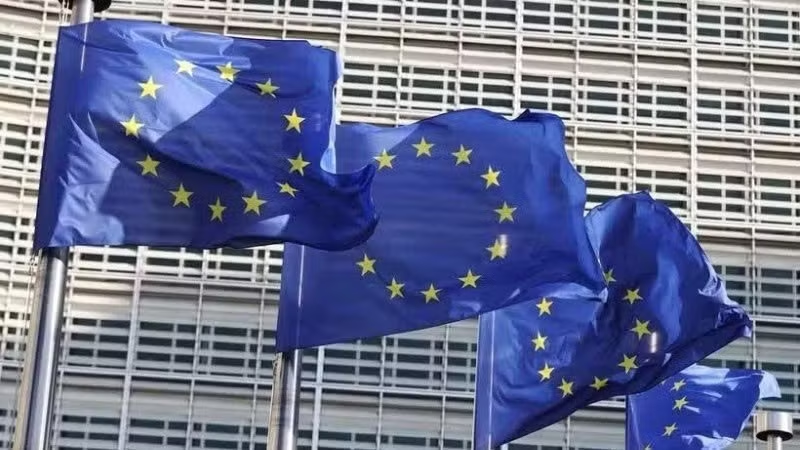
The past decade has witnessed sustained efforts by UK and EU leaders to mend divisions and steer bilateral relations towards mutually beneficial cooperation. Yet lingering doubts remain over whether Brexit has truly benefited the UK.
Over the past 10 years, UK-EU relations have experienced both highs and lows, ranging from fierce disagreements during negotiations over post-Brexit arrangements to more recent attempts to thaw what had become a frosty relationship. On January 31, 2020, the UK officially left the EU. The subsequent negotiations proved arduous, marked by disputes over fishing rights, competition policy, and the Northern Ireland issue, among other contentious matters, preventing both sides from reaching a fully satisfactory agreement.
Several negotiation deadlines were set by London and Brussels, only to be missed repeatedly. At times, trade between the two sides was severely disrupted, with thousands of lorries stranded at the Port of Dover — the UK’s main gateway to continental Europe.
Relations across the English Channel improved significantly after the Labour Party came to power in the UK. Britain and the EU had planned to hold a summit in Brussels on July 22 this year, hoping to reach agreements on food and animal safety standards, youth mobility schemes, and other areas of cooperation. However, the event has reportedly been postponed following British Prime Minister Keir Starmer’s recent announcement of his resignation.
The first bilateral summit, held in London in May 2025, was widely regarded as a milestone that opened a new chapter in UK-EU relations after years of Brexit-related tensions. President of the European Council Antonio Costa stated that close cooperation between the EU and the UK was essential for Europe’s security, resilience, and shared prosperity.
Notably, efforts by both sides to rebuild ties have been driven by an increasingly unpredictable international environment, particularly amid strains in the alliance between the US and its European partners. At the same time, many Britons remain sceptical about the tangible benefits Brexit has delivered.
According to a survey conducted in the UK in May this year, when respondents were asked about the greatest benefits brought by Brexit, the most common answer was “I don’t know”, followed by “no significant benefits”. Regarding Brexit’s overall impact on the country, 66% of respondents believe it has increased pressure from the cost-of-living crisis, while 65% said it has negatively affected the economy.
These findings suggest that whether Brexit was the right decision for Britain remains a matter of intense debate. Although the UK left the European bloc several years ago, the repercussions of that departure continue to pose challenges for both sides.
For the EU, the departure of UK — one of the bloc’s largest economies and a major military power — has left a significant gap in terms of both security and economic strength. For the UK, a study published at the end of 2025 concluded that the 2016 Brexit vote had reduced the country’s GDP per capita by between 6% and 8% over the past decade.
Meanwhile, the majority of EU citizens support the idea of the UK rejoining the bloc. A survey conducted across 15 EU member states found that 66% of respondents viewed Britain’s return to the EU as either a positive or acceptable prospect.
However, in response to public suggestions that the UK and the EU should reunite, EU officials have adopted a cautious stance. European Commission Chief Spokesperson Paula Pinho stated that the issue could only be considered if a formal proposal were submitted.
Against the current backdrop, international political analysts generally view the UK and the EU’s efforts to improve relations as a step in the right direction. Such efforts not only help mitigate the lingering effects of Brexit but also strengthen both sides’ positions on the international stage and enhance their collective ability to respond to shared challenges.