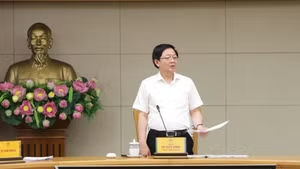
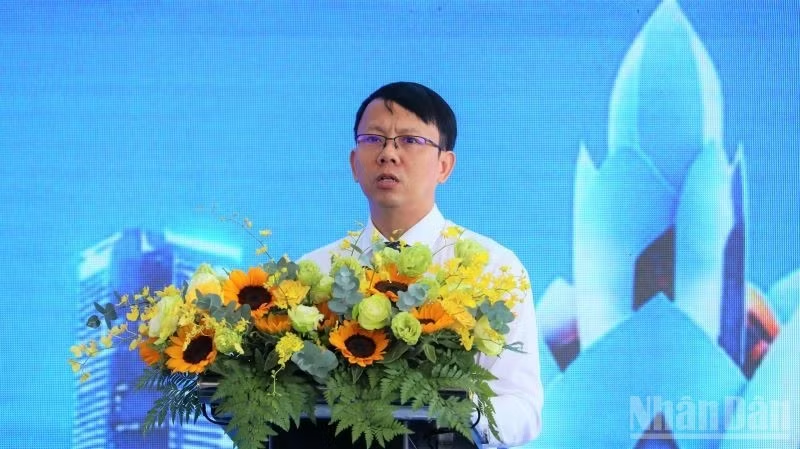
In his opening remarks, Nguyen Thanh Ha, Vice Chairman of the Khanh Hoa Provincial People’s Committee, highlighted the province’s issuance of a digital transformation strategy for the 2026–2030 period. The province is gradually refining its digital data architecture and promoting data connectivity, sharing and exploitation, with the aim of developing digital government, the digital economy and digital society in an integrated manner, supported by digital infrastructure, digital data and artificial intelligence.
According to Nguyen Thanh Ha, Khanh Hoa is focusing on digital transformation across three pillars in 2026.
For digital government, the province is working to improve shared infrastructure, standardise and connect data to support the two-tier local government model, expand online public services and increase the processing of administrative dossiers online.
In the digital economy, cashless payments, electronic invoices and management platforms are being promoted in production and business activities. E-commerce, seaport logistics and high-tech agriculture are also gradually incorporating digital technologies into their operations and supply chains.
For digital society, fibre-optic infrastructure and 5G networks continue to expand, with coverage reaching 98% of the population. Community digital technology teams, the “Digital Literacy for All” movement and the Khanh Hoa Digital Trust Club, which began operating in September 2026, are helping improve digital skills and enable residents to identify online fraud risks.
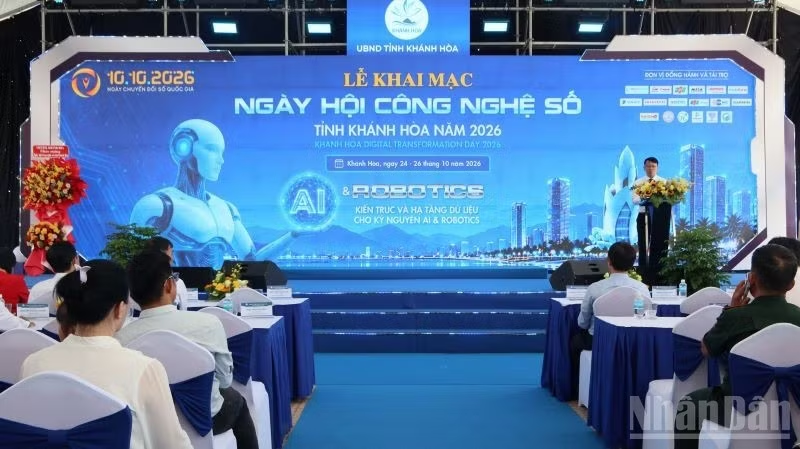
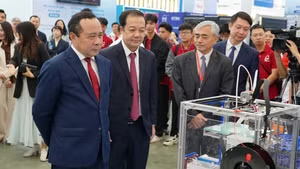
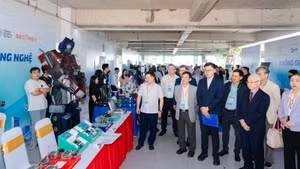
At the festival, various technological solutions were introduced to address practical needs in daily life, production and public administration.
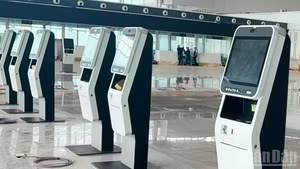
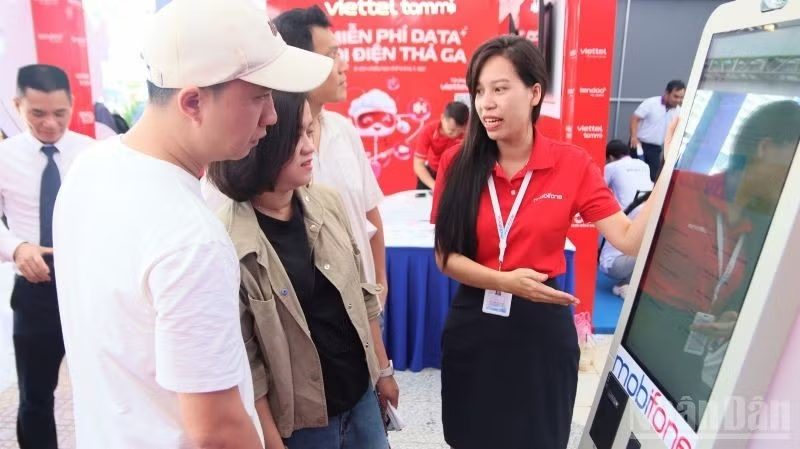
Le Thi Bich Phuong, a sales specialist at MobiFone Khanh Hoa’s Digital Solutions Centre, said that public administration kiosks enable residents to carry out certain procedures related to the issuance and replacement of identity cards, temporary residence registration and notification of temporary absence, as well as other public administrative services. Users can take a queue number or enter information directly into the devices to complete their dossiers with guidance from the system.
“Once the steps are completed, the system helps compile the information and generate a dossier form for residents to check, sign and submit to the relevant authorities. The solution is designed to connect with platforms operated by the police and local public administration units, while prioritising the safety and security of personal information during use,” Phuong said.
The technology solutions showcased at the festival are helping strengthen links between state management agencies, technology businesses and the public, creating more opportunities for residents to access and experience the practical benefits of digital transformation.