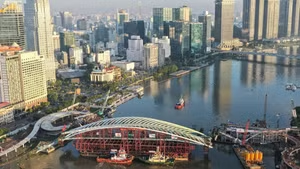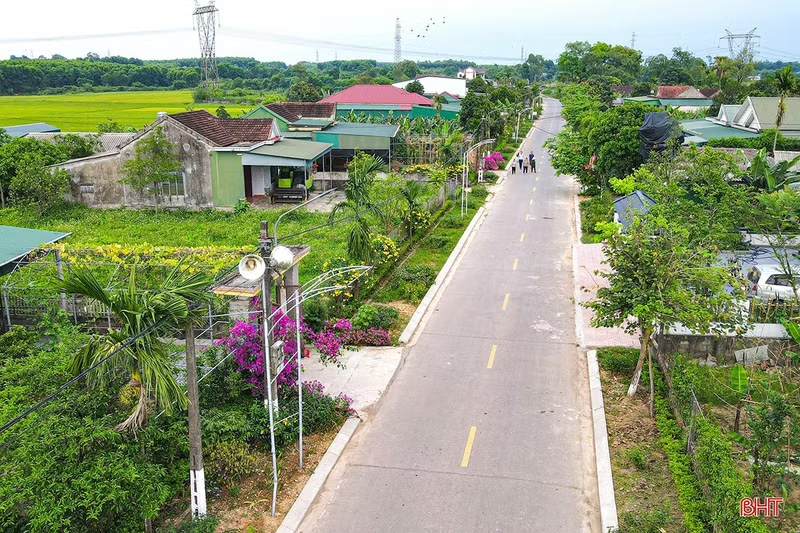
This represents a concrete step towards realising the policy of developing synchronous infrastructure and enhancing planning quality, contributing to the gradual transformation of the rural landscape in a modern and sustainable direction.
According to the Circular, the planning criterion has been elevated, emphasising quality, openness, transparency, and implementability. Localities must not only ensure an approved commune-wide master plan but also develop specific implementation plans compliant with legal regulations on urban and rural planning.
In particular, clear requirements are established for arranging and stabilising residents in areas frequently affected by natural disasters, border regions, and difficult terrains, to safeguard safety and enable long-term development.
In the infrastructure domain, transport remains a core criterion. Commune roads must meet standards as per the plan and receive regular maintenance and repairs. A noteworthy innovation is the push for “green” infrastructure, requiring at least 50% of commune roads to have trees planted along their length.
For provinces and cities, completing the new rural task demands a seamless transport system linking all communes, with at least 70% of provincial road length featuring trees to enhance the ecological environment and regional aesthetics.
The residential housing criterion is further refined to boost quality. Permanent houses must satisfy three standards—comprising a solid foundation and frame, sturdy walls, and a durable roof constructed from robust materials—ensuring a service life of 20 years or more. This aims to elevate living standards while improving resilience to climate change impacts.
Rural environmental protection features more specific requirements. Communes must devise surface water drainage plans, along with collection and treatment of domestic wastewater suited to local conditions. The collection and treatment rate for domestic wastewater must reach 50% or higher.
For communes adjacent to urban areas or oriented towards urban development, there is an obligation to establish at least one centralised wastewater treatment facility that complies with technical standards.