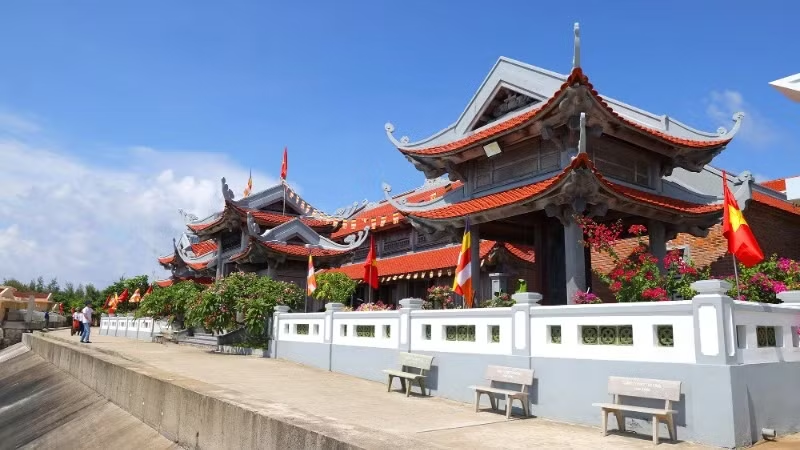
Da Tay A Pagoda was inaugurated at the same time as Truong Sa Dong and Sinh Ton Dong Pagodas. The pagoda was built in the T-shaped architecture, a traditional style imbued with the Vietnamese spirit, with curved roofs, wooden pillars, and delicate carvings, blending in with the sound of the sea breeze and the warm sunlight.
Located near the island gate and facing the East Sea/South China Sea, the pagoda, viewed from afar, resembles lotus blossoms on the emerald backdrop. Spiritually, it seems a compassionate embrace to soldiers and people on the island, as well as welcoming visitors from the mainland. Every morning and afternoon, its echoing bell reminds all of the cultural roots and human kindness at the forefront of the wind and waves.
As abbot, Venerable Thich Nhuan Hieu not only maintains spiritual practices but has also nurtured a lush, vibrant garden. Under his care, the pagoda grounds have flourished with dozens of flower species blooming year-round, symbols of life and faith on the island.
In a small garden, yellow papaya trees begin to blossom and bear fruit. The ripening fruit clusters seem to herald a season of renewal, teeming with hope and vitality. On the islands, papaya trees are well-suited to the conditions, yielding abundantly and beautifully, making them ideal offerings during festivals and the Lunar New Year Festival.
The Truong Sa archipelago has two seasons: the dry season, lasting from February to April, with scorching heat and drought; and the rainy season, from May to January of the following year, bringing storms and heavy squalls. Despite the harsh climate, Venerable Hieu’s garden remains lush and gentle, resilient against nature’s trials. Small cacti stand shoulder to shoulder with succulents. Square-fruited banyan trees, only about a handspan’s height, already unfurl their leaves like a child reaching eagerly toward the sun and sea. Colourful bougainvillaea has been cared for and shaped by the abbot himself. Even chilli peppers, from the wild chile pepper, to the heart-wrenchingly spicy "Dragon's Breath" chilli pepper, are now in full bloom, both for viewing and harvested by the soldiers and people on the island to spice up their meals.
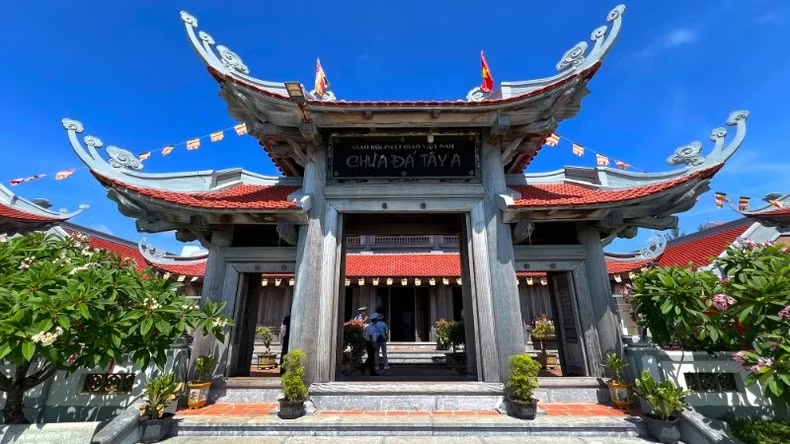 |
| The majestic and intimate gate of Da Tay A Pagoda |
Since becoming abbot in February 2022, Venerable Hieu has been sowing seeds and planting trees. Astonishingly, he has cultivated around 60 types of bougainvillaea and 40 types of chilli peppers. He is fond of growing plants unique to Viet Nam and is also keen on experimenting with exotic species, such as the "Dragon’s Breath" chilli, bred by a British expert and gifted to him by a friend.
The garden is, in essence, a dream nurtured daily by his love for the land, its people, and the boundless sea breeze of the Fatherland. Observing the foliage reaching skyward, the tiny pots soaking in the sunlight like miniature fireworks, one can’t help but feel: the distant islands become more vibrant and greener thanks to the love, patience, and compassion of the humble monk.
Da Tay A Pagoda is one of nine pagodas on the Truong Sa archipelago, including Truong Sa Lon, Song Tu Tay, Sinh Ton, Son Linh (Son Ca), Nam Huyen (Nam Yet), Vinh Phuc (Phan Vinh), Truong Sa Dong, and Sinh Ton Dong Pagodas. Each pagoda serves as a spiritual landmark, connecting people on the mainland to the sea and islands and offering strength to the soldiers and civilians who live on the sea.
Amid the boundless sea and sky, the sound of pagoda bells dispels loneliness, carrying a persistent message: wherever there are Vietnamese people, there is culture, spirituality, and the love for the homeland, even amid storm-tossed oceans. The profound sense of standing before an island pagoda is unforgettable. In that moment of peace, one finds a solemn beauty, a silent resilience that comforts every soul.
The pagoda on the distant island becomes a beacon for the spirit of island soldiers, a sanctuary for those seeking solace. Amidst the chime of bells, the whisper of ocean wind, and the quiet silhouette of the monk sweeping the courtyard, caring for plants, and reciting sutras, one feels the strange connection between the religion and life, of spirituality and national pride.
In the searing heat of Truong Sa’s dry season, when every drop of freshwater is precious, the abbot still saves his ration to nourish growing flowers and vegetables. On these islands, such devotion is typical of the monks. During intense training, soldiers too busy to care for their potted plants will often entrust them to the pagoda’s care, which is a familiar image.
On islands, each budding sprout is not only a sign of life but a symbol of resilience and hope amid the sea. Outside their rituals, the monks often teach the island’s children their first lessons in filial piety, kindness, and patriotism with warmth, humility, and compassion.
At times, the abbot quietly listens to the island soldiers share stories about their families: a child born whom the father has yet to meet, elderly parents falling ill with no child at their side, joyous news and sorrows that reach them only from afar, without the comfort of presence. In these moments, the pagodas become their emotional anchor, supporting those who shoulder the sacred duty of national defence.
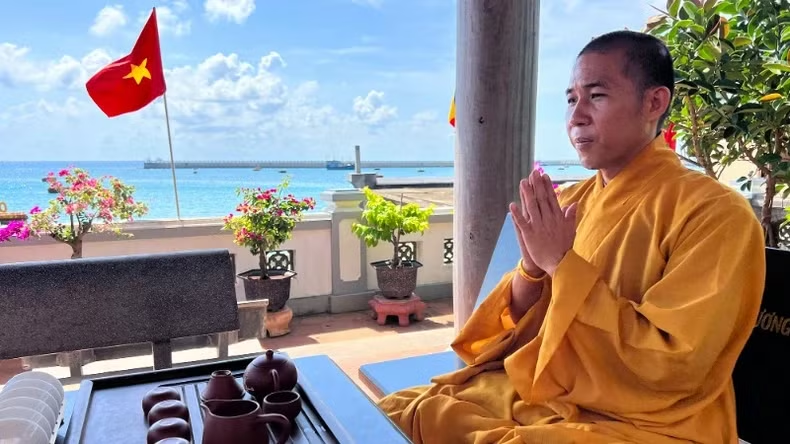 |
| Venerable Thich Nhuan Hieu, abbot of Da Tay A Pagoda. |
On the islands, human connections are cultivated in the simplest of gestures, like the fragrant, sweet soup prepared by the monks from precious pomeloes sent from the mainland on the occasion of the Lunar New Year festival. Initially, the pomelos are offered on the ancestral altar as part of the five-fruit tray on Tet, then they are later lovingly peeled and transformed into bowls of pomelo sweet soup, brimming with the flavours and affection of home. The monk sets out the small bowls in the courtyard. “Soldiers, come by after your duties, have a bowl to ease your weariness and homesickness,” he says with a gentle smile, a kind voice, and eyes filled with warmth and longing.
Throughout the archipelago, the relationship between monks and the soldiers and people is like coral roots clinging to rock: quiet, natural, and enduring. To the island’s children, the monk is both teacher and trusted friend. They love to visit the pagoda, ask for calligraphy, and chatter around the abbot with dirt-streaked hands from planting trees and laughter echoing across the small courtyard. In the hearts of every soldier and islander, the pagoda is the warmth of home, a spiritual haven steadfast amid the vast blue sea, a place that shelters souls.
On the islands, in the quiet ring of pagod bells, monks patiently nurture seedlings and sweet harvests under harsh winds and sun. Thanks to their boundless love and compassion, children's laughter grows louder, and the weary eyes of soldiers soften after long shifts of guarding in the dewy night. Human kindness is cultivated daily through warm gestures at this sacred place. That is why, for so long, the island pagoda has safeguarded the soul of the nation, a place where ties to the mainland, love, and national pride quietly bloom like a lotus on the ocean.