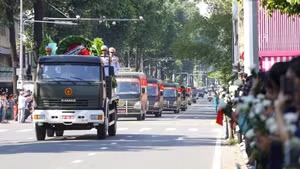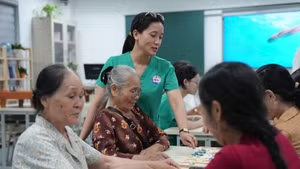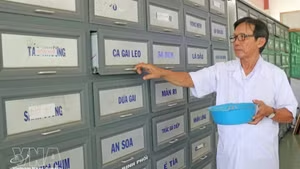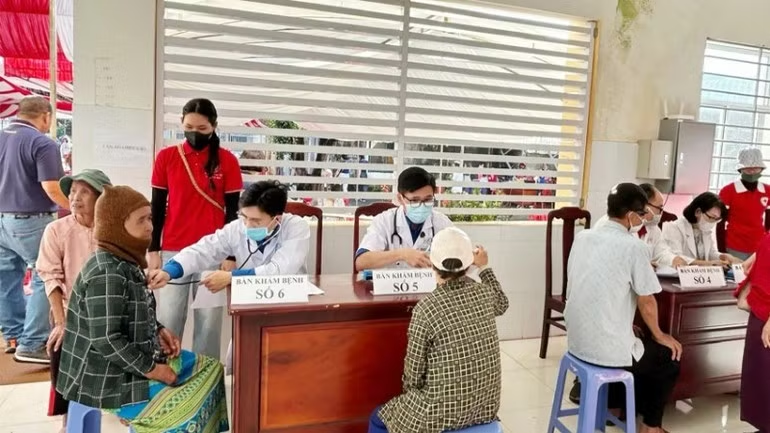
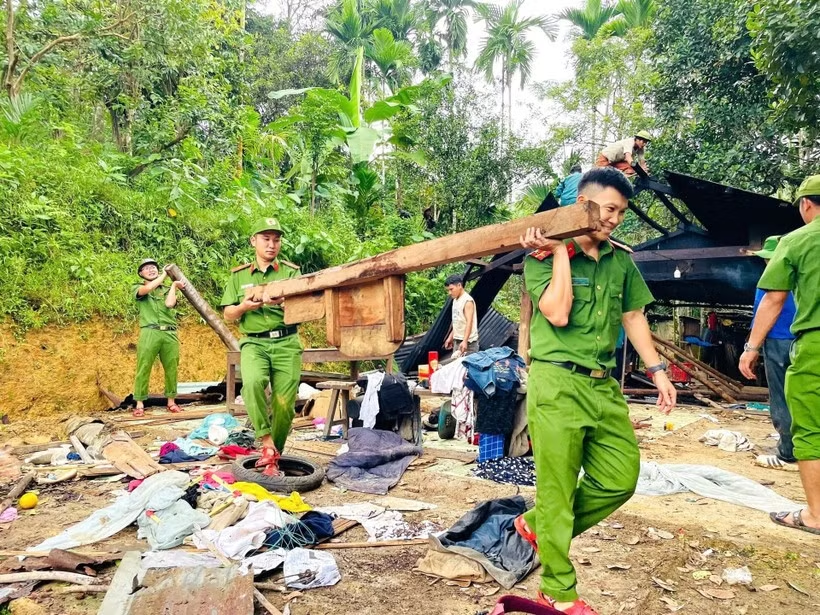
Alongside the responsible and timely care provided by the Party and State, communities, agencies, organisations, businesses, and citizens have swiftly and voluntarily contributed effort and money to ensure no one in difficulty is left behind.
In recent years, as storms and floods struck successive provinces and cities, relief efforts — from large and organised volunteer groups to small and spontaneous teams — have all played an active part, powerfully demonstrating the deep bonds of solidarity among compatriots in times of calamity.
Images of people joining hands through the night to cook thousands of meals for flood victims, collections of warm clothing, and convoys of “charity vehicles” travelling from every corner of the country to the hardest-hit areas have moved the nation deeply.
Many families, still reeling from the storms themselves and facing countless worries, have nonetheless generously shared part of their income or essential goods to help their fellow citizens.
This spirit extends far beyond disasters and epidemics. In everyday life, charitable work and support for the vulnerable consistently receive profound community attention, giving rise to movements with immense reach and impact.
Programmes such as “Rice with Meat” and “Warm Clothes for Children in Mountainous Regions” have drawn participation from all walks of society. Each individual contributes a modest share of kindness and effort through practical actions, hoping to ease the burdens of those less fortunate.
A social safety net has been woven, enabling many people in difficult circumstances to rise above adversity. This priceless value helps build a responsible, humane society.
Thanks to this collective strength, a social safety net has been woven, enabling many people in difficult circumstances to rise above adversity. This priceless value helps build a responsible, humane society.
Nevertheless, alongside these noble acts, several recent charity cases have revealed significant shortcomings, particularly regarding transparency.
Many observers warn that a lack of transparency not only risks distorting the image of philanthropy, but can also lead to the good intentions of the majority being unfairly tarnished by the misdeeds of a few.
This raises a critical issue: the community’s trust and generosity remain wide open, ready to give whatever they can.
Yet without clear, verifiable information in charitable projects, there is a real danger that public faith will erode, diminishing the effectiveness of these meaningful activities.
Worse still, it could trigger psychological fallout: the very people who most need help may feel abandoned, trapped in a vicious cycle of poverty and isolation.
Moreover, gaps in transparency can be exploited by unscrupulous individuals who impersonate reputable organisations or misuse initiatives for personal gain, causing precious societal resources to be squandered.
More seriously, in an era of rapidly spreading information, hostile forces could seize upon such cases to attack, sow division and distrust, distort the role of the social welfare system, and the leadership of the Party and State, thereby harming social order and national development.
Government Decree 93/2021/ND-CP dated October 27, 2021, on the mobilisation, receipt, distribution, and use of voluntary contributions to overcome difficulties caused by natural disasters, epidemics, incidents, and to support patients with serious illnesses, provides clear regulations and an important basis for evaluating and supervising charitable activities by organisations and individuals.
However, compliance — especially the requirement for openness — depends heavily on the awareness, responsibility, and professionalism of those who initiate and manage the fundraising.
If those responsible fail to uphold high standards, serious consequences follow. Transparency, therefore, is not merely a legal matter; it is a question of social ethics and of nurturing public trust.
When trust is damaged, generosity itself may dwindle. Even well-intentioned campaigns can struggle to succeed or may backfire. Promptly addressing these issues demands comprehensive solutions to eliminate malpractice and ensure charity retains its noble, sustainable character.
First and foremost, every organisation or individual soliciting donations must strictly adhere to the law: open dedicated bank accounts, fully disclose inflows and outflows, publish detailed reports on funds raised and distributed, and provide receipts when requested.
Strengthening public confidence in charity requires concrete evidence: transparent accounts, comprehensive reports, lawful receipts, and specific beneficiary lists — guaranteeing that every Vietnamese dong, every meal, every warm jacket reaches exactly the right person.
Integrating blockchain technology into fund management would eliminate risks of manipulation and embezzlement. At the same time, independent oversight mechanisms — by state agencies or reputable third parties — should conduct audits after each campaign, with strict penalties imposed for violations to maintain deterrence.
According to lawyer Hoang Ha from Ho Chi Minh City Bar Association, the legal framework must be further refined and made more specific to ensure charity can develop sustainably.
For instance, any project raising more than 500 million VND per year should be required to undergo mandatory independent auditing, regardless of whether a formal fund is established.
Mainstream media and social media platforms must fulfil their responsibility by actively monitoring and exposing wrongdoing, by demanding disclosure of receipts, beneficiary lists, and confirmation documents; investigating and publishing timely, accurate, and fair findings.
As for the donor community, they should remain discerning and vigilant: thoroughly research recipients, choose reputable channels, and closely follow how their contributions are used to ensure aid truly reaches those in need.
Ultimately, strengthening public confidence in charity cannot rely on empty promises alone. It requires concrete evidence: transparent accounts, comprehensive reports, lawful receipts, and specific beneficiary lists — guaranteeing that every Vietnamese dong, every meal, every warm jacket reaches exactly the right person.
This is all the more vital as we strive for a sustainably developed society where no one is left behind, and where kindness continues to spread and last.