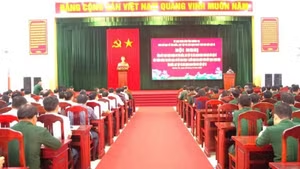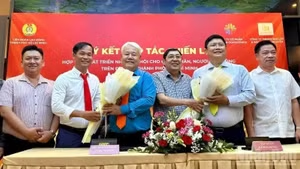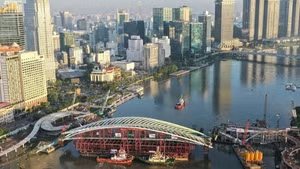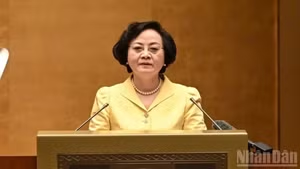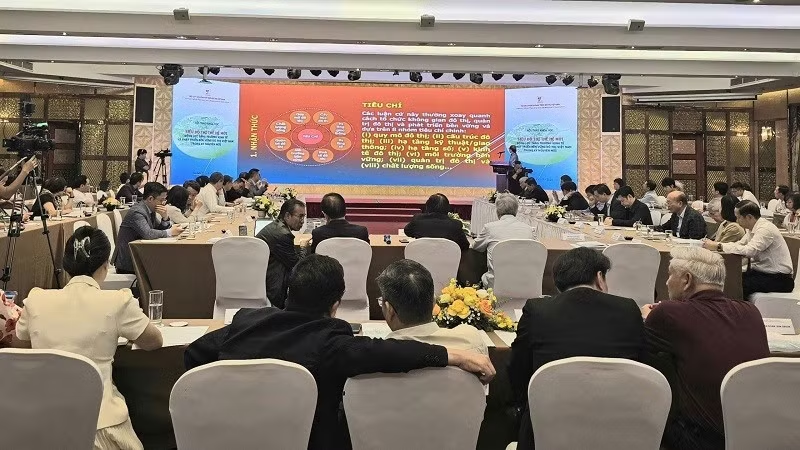
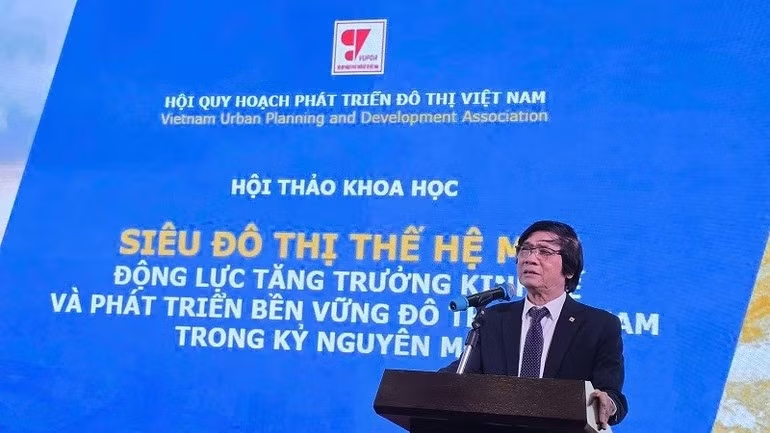
In his opening remarks, VUPDA Chairman Tran Ngoc Chinh noted that the traditional megacity model has largely been based on population growth and spatial expansion. However, in practice, such models have revealed numerous limitations, including infrastructure overload, environmental pollution, social inequality, and declining quality of life. In response to these challenges, many countries and international organisations such as UN-Habitat, the OECD (Organisation for Economic Co-operation and Development) and the World Bank have shifted towards researching and developing next-generation megacity models.
Next-generation megacities emphasise polycentric structures, regional network connectivity, smart governance, and sustainable development. Notably, they do not focus on expanding land area or population size, but rather on advances in science and technology, including green urban development, smart cities, global connectivity, and digital transformation.
In Viet Nam, urbanisation is progressing rapidly, with the emergence of large urban regions and economic–urban corridors such as the Ha Noi Capital region, the Ho Chi Minh City region, and coastal development axes. These trends indicate a shift from a monocentric urban model to region-based, polycentric and functionally integrated urban structures, laying the groundwork for the potential formation of next-generation megacities in the future. However, the theoretical framework, development models and governance mechanisms for this type of urban system have yet to be studied in a comprehensive and systematic manner.
The seminar therefore aimed to identify and clarify the concepts, models, roles, positions, development opportunities, scale, structure, institutional, infrastructure, and technological conditions, as well as the impacts of next-generation megacities on urban planning, construction, and Viet Nam’s socio-economic development.
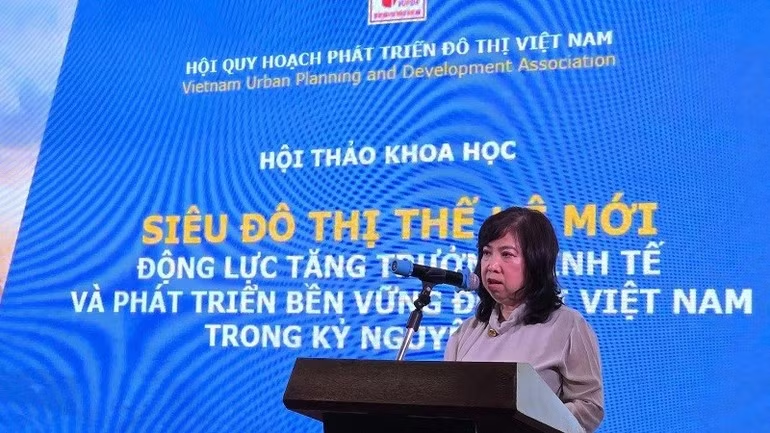
According to Tran Thu Hang, Director General of the Department of Planning and Architecture under the Ministry of Construction, global practice shows that the traditional megacity model is facing significant limitations. As a result, many countries are shifting decisively towards next-generation megacities, focusing on operational capacity, connectivity, innovation, and governance quality. This orientation is fully aligned with the spirit of Politburo Resolution No. 06-NQ/TW on the planning, construction, management, and sustainable development of Viet Nam’s urban areas to 2030, with a vision to 2045, as well as Conclusion No. 224-KL/TW (dated 8 December 2025) on the continued implementation of Resolution No. 06-NQ/TW. The resolution calls for the development of an urban system that is sustainable, synchronised, highly connected, and capable of serving as a key driver of economic growth and structural transformation.
She urged agencies, organisations, experts and scientists to continue in-depth research and contribute ideas to refine the scientific and practical foundations for shaping next-generation megacity models in Vietnam, thereby enabling the Ministry of Construction to advise the government on the formulation and implementation of urban development strategies, plans, and policies.
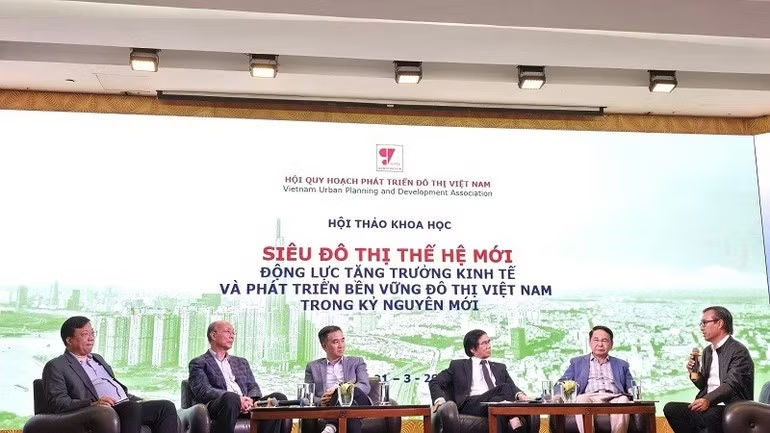
At the seminar, the Viet Nam Urban Planning and Development Association also held two panel discussions on the themes of “International experience and lessons for Viet Nam” and “Positive impacts of next-generation megacities and solutions for application in Viet Nam”.