A protocol on phytosanitary requirements for exporting pomelos and lemons from Viet Nam to China was officially signed on April 15 in Beijing between Viet Nam’s Ministry of Agriculture and Environment and the General Administration of Customs of China (GACC).
The signing was conducted within the framework of the ongoing state visit to China by General Secretary of the Communist Party of Viet Nam Central Committee and State President To Lam.
According to the ministry, this move is the result of a well-structured technical negotiation process that has lasted since 2019 between the two countries’ specialised agencies in plant protection and quarantine. It reflects close coordination, a high sense of responsibility in harmonising technical requirements, and proactive efforts to prioritise market access for products with strong potential and competitive advantages.
In the context of steadily expanding Viet Nam – China agricultural cooperation, the protocol further affirms a shift toward official export channels that are transparent and compliant with international standards, while demonstrating the increasingly refined bilateral cooperation framework. Under the protocol, all growing areas and packing facilities for pomelos and lemons exported to China must be registered with the Ministry of Agriculture and Environment and approved by both the ministry and GACC. These facilities are required to implement strict pest control measures.
Growing areas must apply Good Agricultural Practices (GAP) and Integrated Pest Management (IPM), including fruit bagging at least 60 days before harvest and the use of traps for fruit flies. Packing facilities must ensure hygienic conditions and proper functional zoning, and the fruits must be sorted, classified, and cleaned to remove diseased or pest-infected ones, as well as plant debris and soil residues.
China remains a key market with strong consumption demand and significant potential for Viet Nam’s fruit exports. Building on the success of other officially exported agricultural products, pomelo and lemon are expected to expand their market share, strengthen their position, and contribute positively to Viet Nam’s agricultural export growth.
In the coming time, the Ministry of Agriculture and Environment will continue working closely with localities, associations, businesses, and producers to effectively implement the protocol, including disseminating regulations, standardising growing areas and packing facilities, and strengthening inspections to ensure full compliance with Chinese requirements.
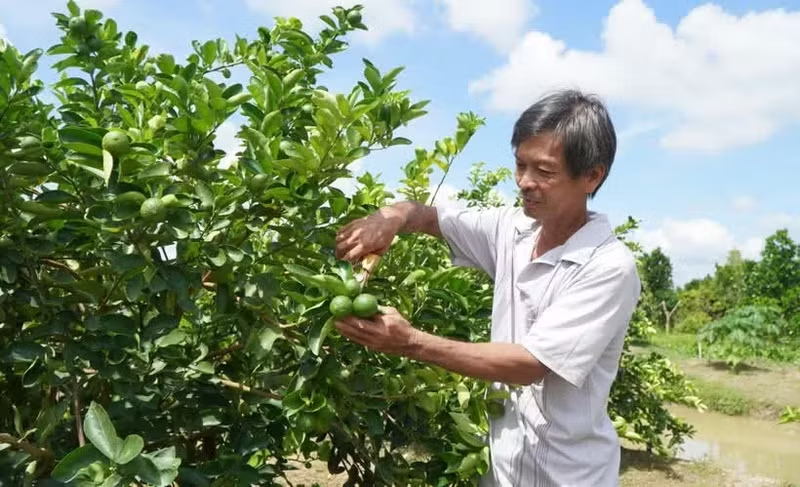
Pomelo and lemon are among Viet Nam’s most advantageous agricultural products. The country currently has around 106,000 hectares of pomelo cultivation, placing it among the world’s major producers.