The United Nations Peacebuilding Week, taking place from June 22 to 26, offers an opportunity to reflect on its progress and chart the next stage in advancing its mission for peace.
This June marks the first time Peacebuilding Week has been held, convening numerous policymakers, experts, scholars, and representatives of younger generations from across the globe.
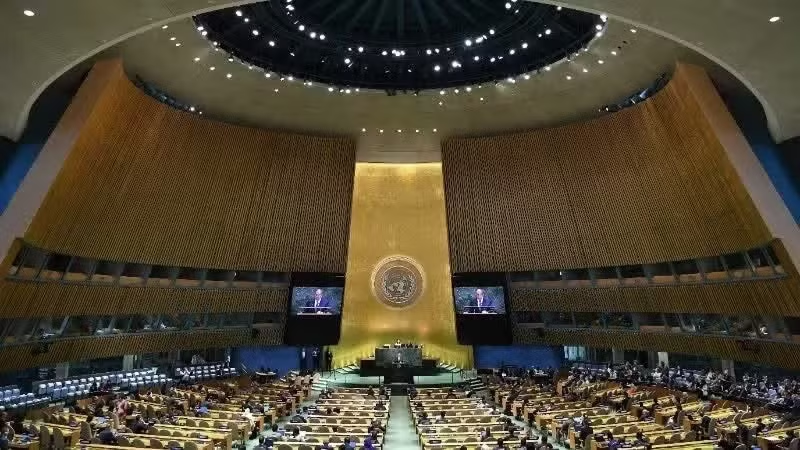
In their messages on this important occasion, delegates agreed that the United Nations has always maintained its irreplaceable position as the “captain” of global governance.
From diplomatic initiatives that prevent conflicts and coordinate aid operations to peacekeeping missions deployed across multiple conflict hotspots, the United Nations has affirmed its leading role in efforts to maintain peace, promote sustainable development, and address challenges that no country can tackle alone.
However, since the United Nations was founded in 1945, the organisation has navigated numerous ups and downs. Today’s global geopolitical picture is markedly different from that of more than 80 years ago.
Although peace and cooperation remain the prevailing trends in international relations, the world is becoming increasingly fragmented, with unilateralism on the rise.
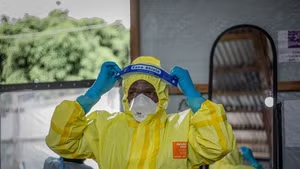
In addition, the “burden” of global issues such as conflicts, climate change, and recurrent disease outbreaks is weighing heavily on the United Nations.
United Nations Secretary-General Antonio Guterres stressed that intertwined crises pose multidimensional challenges to the “common home” of 193 member states. Among these, conflict hotspots represent the greatest obstacle to the United Nations’ mission for peace.
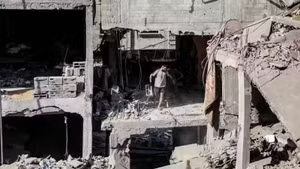
A report recently released by the Peace Research Institute Oslo shows that the number of armed conflicts worldwide is at its highest level since the Second World War.
In the 2021–2025 period alone, more than 930,000 people were killed in state-based conflicts, a figure nearly equal to the total number of deaths recorded in the previous 20 years.
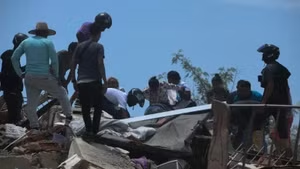
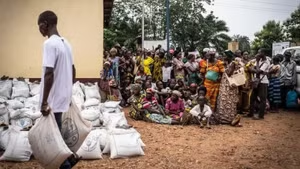
The toll extends beyond the lives of hundreds of thousands of innocent civilians to include a series of severe repercussions, including poverty, illegal migration, exhausted economies, and educational setbacks in many countries.
Mounting responsibilities amid budget cuts have left the United Nations facing unprecedented challenges.
Over the past two years, financial shortfalls have forced the United Nations to operate below the approved budget level, freeze recruitment, and scale back global programmes.
Worryingly, according to Secretary-General Antonio Guterres, the organisation’s “financial health” shows no prospect of improvement in 2026.
If the budget “gap” is not filled soon, many United Nations activities could stall, leaving the multilateral organisation in a position where its capacity falls short of its mandate. From an internal perspective, shifts in the international environment require the United Nations to reform to maintain its role as a “conductor.”
Secretary-General Antonio Guterres has repeatedly stressed that the organisation must reform swiftly to improve its adaptability and meet the requirements of the new context.
Reform is a challenge, but also an opportunity for the United Nations to enhance its operational effectiveness and continue building a sustainable future for humanity.
Established following the Second World War, the United Nations carries humanity’s shared aspiration for a world of peace, stability, and development.
The world has undergone profound changes over the past 80 years, but the United Nations’ core mission of maintaining peace and international security, promoting human rights, and advancing sustainable development remains as valuable as ever.
To continue fulfilling its historic mission in the new context, the United Nations is reforming its apparatus to adapt to today’s geopolitical realities.
However, this effort can only succeed if it receives partnership and practical support from all member states.