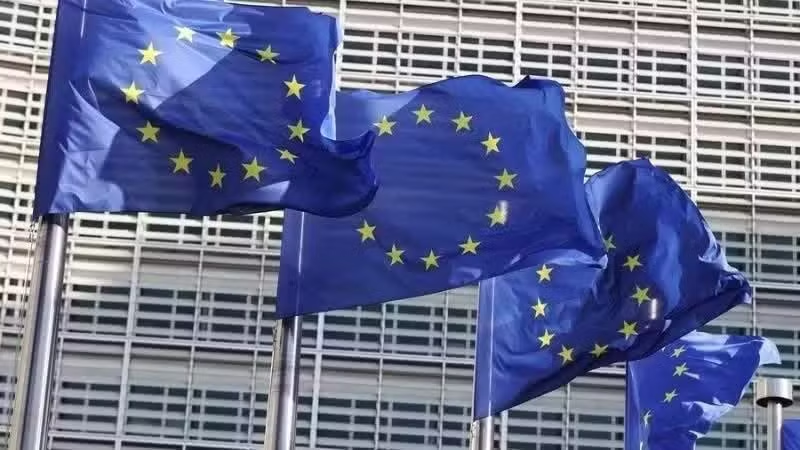
The simultaneous conflicts in Ukraine and the Middle East have exposed the EU’s difficult position, highlighting internal divisions, diplomatic dilemmas under external pressure and the erosion of the bloc’s influence on key international issues.
Both conflicts are among the main topics under discussion at the EU summit taking place in Brussels, Belgium, on June 18 and 19. Leaders are also expected to address a host of other issues, including the EU budget, competitiveness, enlargement, migration pressures and drug-related crime.
Against the backdrop of recent strains in transatlantic relations, the traditional Western order, long held together under the leadership of the US, is gradually giving way to a new reality in which Europe is compelled to enhance its strategic autonomy and reduce its dependence on its long-standing ally.
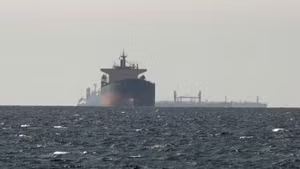
The summit comes at a pivotal moment in the Middle East conflict. While the US and Iran appear to be moving closer to a historic peace agreement, the international community remains concerned about the fragility of any such deal and the potential risks it could pose to strategic shipping routes and global energy security.
According to international observers, the Middle East crisis has underscored differences in strategic culture between the US and Europe. While European countries tend to favour diplomacy, mediation and sanctions, Washington places greater emphasis on deterrence, military intervention and force projection.
In the conflict in Ukraine, which directly affects European security, the EU’s role has at times appeared diminished as Russia and the US pursued separate diplomatic initiatives without involving the bloc.
The Union also required considerable time to approve a 90 billion EUR emergency assistance package for Ukraine. Diverging national interests among member states have not only delayed key decisions but have also undermined Brussels’ image and credibility as a reliable international partner.
Against this backdrop, redefining the EU’s role in a rapidly changing world has become an urgent priority. Strategic autonomy has been a recurring theme at numerous EU meetings, and developments over the past year have only heightened its importance.
The bloc recently adopted a comprehensive defence reform package aimed at reducing bureaucracy and boosting the production, procurement and circulation of defence-related products. At the summit, leaders are expected to focus on measures to strengthen competitiveness across the economy, energy, defence and technology sectors.
EU enlargement is also viewed as a means of reinforcing the bloc’s strength and influence. The Union has recently advanced the membership bids of both Ukraine and Moldova to the next stage. However, admitting new members, particularly a country with substantial reconstruction needs such as Ukraine, would place considerable financial pressure on the bloc.
As transatlantic relations undergo profound restructuring, the EU’s efforts to strengthen its position, resilience and strategic autonomy will be crucial to its future development.
Yet with 27 member states holding differing geographical, political, security and economic interests, the bloc’s success will depend on its ability to forge common strategies and act with unity, rather than allowing decisions to be shaped primarily by the interests and influence of its largest economies.