The agreement is seen as a step towards the first global set of rules for digital trade, delivering benefits for businesses and consumers while helping developing countries integrate more deeply into the digital economy.
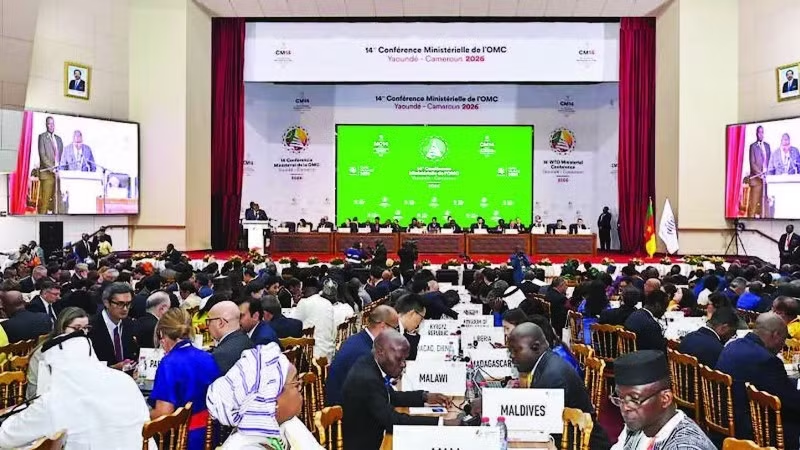
At the 14th WTO Ministerial Conference (MC14) in Yaoundé, Cameroon, despite differing views, 66 WTO members — accounting for around 70% of global trade — agreed to bring the e-commerce agreement into effect through interim arrangements.
These arrangements provide a roadmap for the WTO E-commerce Agreement to formally enter into force, while paving the way for its integration into the organisation’s broader legal framework. Against the backdrop of a fast-growing digital trade landscape, the implementation of the agreement is expected to reduce costs, unlock new opportunities, drive growth, and create jobs.
In a bid to fully leverage the benefits of e-commerce, major economies including Singapore, Australia, Japan, the European Union, Canada, and China have accepted the interim arrangement. The agreement does not apply to Bangladesh, which continues to support the extension of the temporary suspension of customs duties for electronic transmissions. As such, only signatory countries will implement the agreement among participating members.
Non-signatories such as Bangladesh will continue to benefit from the temporary suspension until the agreement is adopted by a majority of WTO members. Data from the WTO and the Organisation for Economic Co-operation and Development indicate that failure to implement the agreement could result in the loss of approximately 159 billion USD in trade value annually. If implemented globally, the agreement could boost global GDP by an additional 8.7 trillion USD by 2040.
The agreement is expected to streamline procedures and reduce costs related to contracts, invoicing, and global payments, thereby facilitating transactions and supporting exporters. It also establishes a foundation for cooperation on privacy and cybersecurity, contributing to a safer and more transparent online trading environment, alongside stronger protections for consumers and personal data.
Notably, reducing cross-border regulatory barriers will enable small businesses and households in remote areas to access global markets more easily and securely. The agreement will also help developing countries better harness the digital economy, while enhancing stability, predictability, and opening up new opportunities for micro, small, and medium-sized enterprises.
Experts stress the need to swiftly implement global digital trade rules, as doing so would enable businesses and consumers to fully realise their benefits. Moreover, the implementation of the e-commerce agreement reinforces the indispensable role of the WTO in the multilateral trading system, demonstrating that it remains a vital platform for developing modern trade rules and addressing pressing policy challenges at a time when global trade and the multilateral system face significant headwinds.