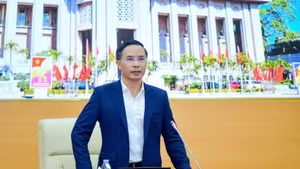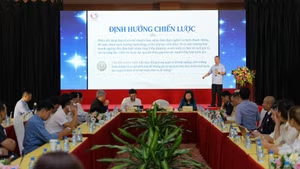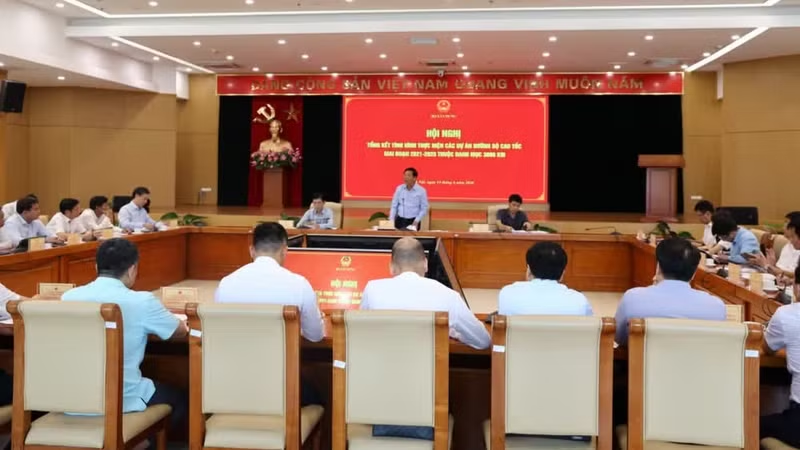
Minister of Construction Tran Hong Minh chaired a conference reviewing the implementation of expressway projects in the 2021–2025 period under the 3,000 km portfolio, in Ha Noi, on June 19.
The event offered an opportunity to review a period of major breakthroughs, affirming the political determination to implement the Resolution of the National Party Congress, working towards the target of 5,000 km of expressways nationwide by 2030.
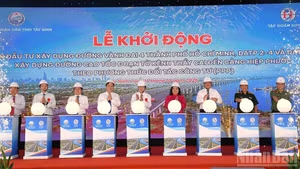
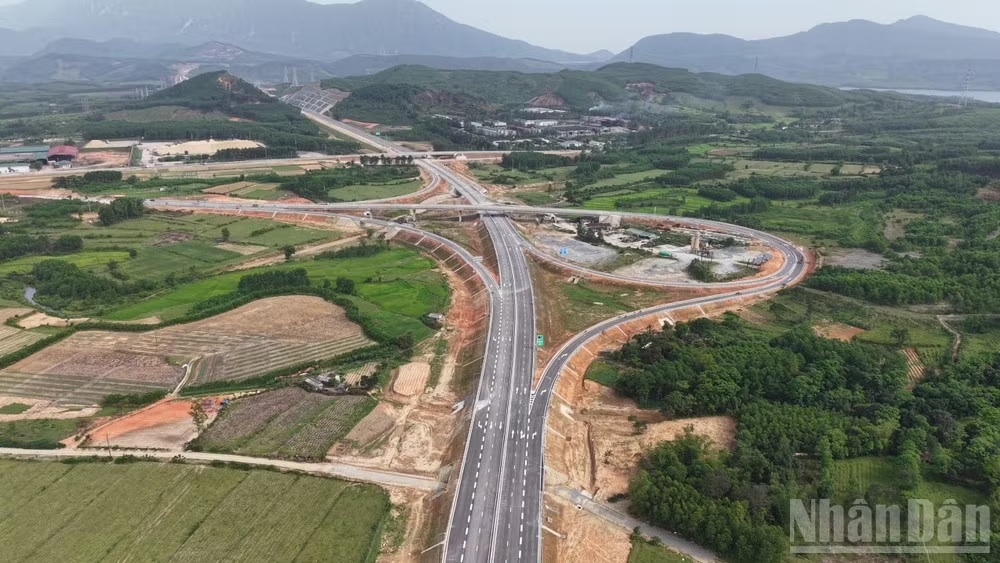
Reflecting on infrastructure development history, during the 2001–2010 period, the country had only about 89 km of expressways. By the end of 2020, the figure had reached just 1,163 km. However, since 2021, the application of special mechanisms and close direction has fundamentally changed the implementation pace. Within about one year after the National Assembly approved the investment policy, 12 component projects of the eastern North-South Expressway in the 2021–2025 period began construction simultaneously on January 1, 2023.
Alongside the achievements, the conference also highlighted the “bottlenecks” that need to be removed. Site clearance remains the most difficult and complex stage, directly affecting project progress. In the Mekong Delta, the shortage of sand for embankments, coupled with limited exploitation capacity, has placed immense pressure on contractors.
However, the requirement is that “speed must not come at the expense of quality.” Minister Tran Hong Minh affirmed that the Ministry of Construction always prioritises quality criteria through the issuance of many directives on occupational safety and environmental protection. With the participation of the State Inspection Council and independent inspection consulting units, the works have consistently met technical and quality requirements in accordance with regulations.
In his concluding remarks, Minister Tran Hong Minh commended the efforts of investors, contractors, engineers, and workers on construction sites. To complete the next targets, he asked the entire sector to thoroughly uphold the motto: “clear persons, clear tasks, clear responsibilities, clear authority, clear timelines, and clear results.”
Looking ahead, the Minister instructed advisory agencies to focus on reviewing and abolishing outdated standards; updating and supplementing new technologies to adapt to climate change; completely addressing urgent issues related to construction materials, ensuring a stable supply for key projects; and studying plans to build viaducts and tunnels in areas with weak ground conditions, ensuring economic and technical efficiency throughout the entire life cycle of projects.