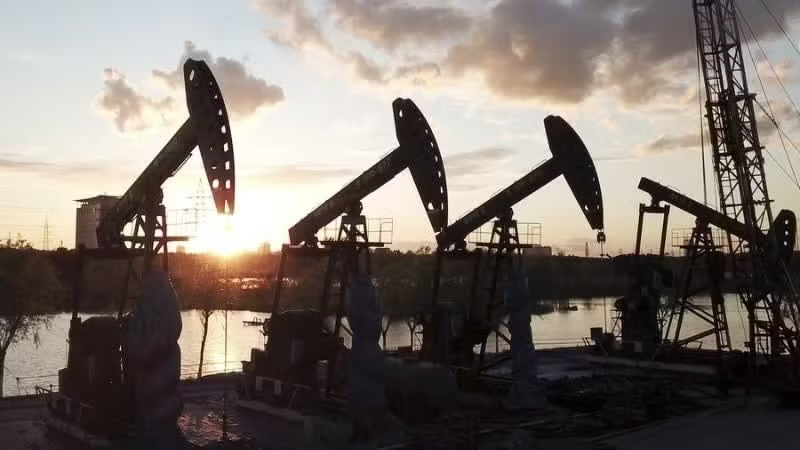
For years, the global oil market operated in a relatively stable state. Ample supply from major producing nations, together with advances in shale oil extraction technology, created a “buffer” that helped maintain prices at reasonable levels.
Before conflict broke out in the Middle East, oil prices hovered between 70 and 80 USD per barrel from 2023 onwards, enabling many countries to keep energy costs down, control inflation, and support global economic growth.
However, the situation has since shifted dramatically. Tensions in the Middle East, home to some of the world’s most critical energy infrastructure, have dealt a major blow to market stability.
The world has faced multiple oil shocks, sometimes driven by geopolitics and at other times by concerns over supply failing to meet demand. Yet almost every time that predictions of oil depletion emerged, new discoveries, technological advances, or alternative sources, such as deepwater extraction or shale oil, followed.
Today’s challenges, however, are of a different nature. Conflict has inflicted severe damage on production facilities in the Middle East, damage that may take years to repair. With national interests growing ever more complex and intertwined, a key question arises: can oil still be supplied reliably, at reasonable prices, and at scale?
These concerns are well-founded, particularly as geopolitical factors are increasingly reshaping the market. Oil prices no longer simply reflect supply and demand but are heavily influenced by strategic interest calculations.
Beyond conflict, a range of long-term trends is also reducing the likelihood of sustained low prices. Many producing countries are actively managing supply to safeguard long-term interests, while the global energy transition has yet to progress quickly enough to fully replace fossil fuels.
Moreover, lessons from the pandemic have fostered a precautionary mindset. Many countries are now stockpiling more oil than strictly necessary, leading to additional costs for storage, infrastructure, and insurance. As a result, the oil market may be entering a new phase characterised by higher prices and greater volatility.
As input costs rise, the threat of an inflationary spiral becomes increasingly difficult to avoid, potentially undermining an already fragile economic recovery, especially in countries dependent on energy imports.
A recent United Nations warning lends weight to these concerns. According to the organisation, the Asia-Pacific region risks losing 299 billion USD in gross domestic product, potentially pushing millions of people into poverty if the Middle East conflict continues to escalate.
In response, many countries have begun adjusting their policies. There are signs that people worldwide are travelling less and making greater use of public transport.
Numerous governments have launched energy-saving campaigns while promoting longer-term solutions, such as diversifying supply sources, improving efficiency, and accelerating the development of alternative energy.
At the same time, international cooperation is being strengthened to stabilise the market and reduce the risk of disruptions. These measures appear to feature preparations for a future in which cheap oil is no longer a given.
Overall, the global energy market stands at a turning point. According to experts, while cheap oil once served as a foundation for growth, the ability to adapt to a new price environment will be a key test of economic resilience in the period ahead.
In an increasingly volatile world, preparing proactively for the end of the cheap oil era is an imperative for safeguarding long-term stability and sustainable development.