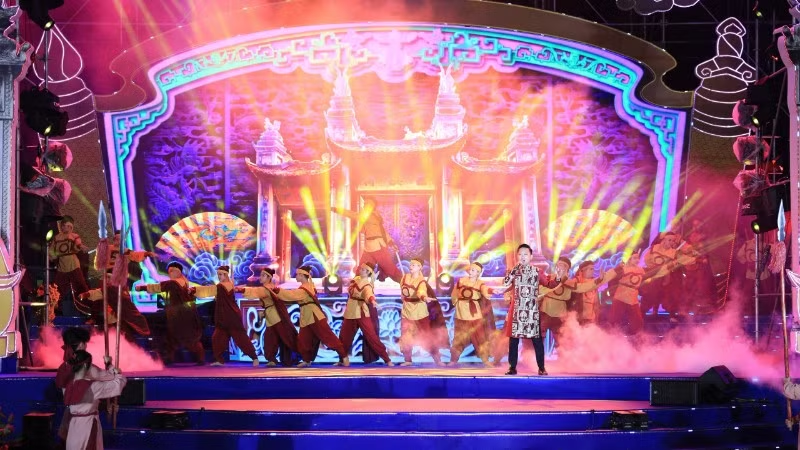
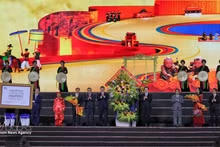
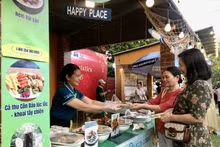
Vietnamese gastronomy is in the spotlight at the Saigontourist Group Culinary Culture & Delicacies Festival 2026, where some 500 dishes are being presented through 10 curated “flavour journeys” at Van Thanh Tourist Area, drawing both local audiences and international visitors.
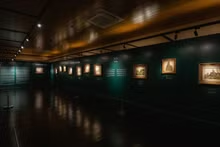
A major exhibition of paintings by Emperor Ham Nghi will open to the public at the Temple of Literature in Ha Noi from April 24 to May 10, Art Nation has announced.

As digital platforms open opportunities to reach audiences, they also place creators in the face of major challenges posed by copying and copyright infringement.
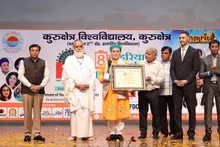
The film “Love Garden - Prem Ki Surdhara” (India), which focuses on Viet Nam’s Quan Ho folk singing, has won the Best International Film award at the 8th Haryana International Film Festival (HIFF).
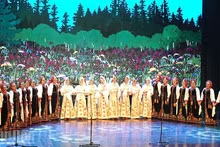
A performance by the Omsk State Academic Russian Folk Choir captivated audiences in Ho Chi Minh City on the evening of March 25, as part of the 2026 “Russian Culture Days in Viet Nam”.

With the theme “DANAFF – Bridging Asia to the World,” the fourth Da Nang Asian Film Festival (DANAFF 2026) will take place from June 28 to July 4, promising to offer a rich and engaging programme for audiences.
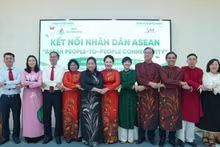
The “ASEAN People-to-People Connectivity” programme is a meaningful initiative that contributes to enhancing people-to-people exchanges as well as strengthening solidarity, friendship, and cooperation between Viet Nam and ASEAN countries; while also promoting the image of a friendly Viet Nam rich in cultural identity in the process of international integration.
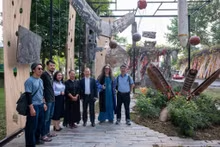
Not only rich in artefacts reflecting nature, history, culture, and the people of Ha Noi, the Ha Noi Museum is adopting creative methods to let artefacts “escape” from vitrines, with heritage transmission activities that foster community imagination.
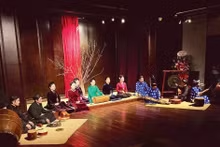
In the heart of Ha Noi’s Old Quarter, the rustic sounds of traditional music quietly resonate, serving as a bridge between past and present. For more than a decade, artists of Dong Kinh Co Nhac (Ancient Music Group of Tonkin) have devoted themselves to preserving these melodies, helping traditional Vietnamese music maintain a lasting presence in contemporary life.
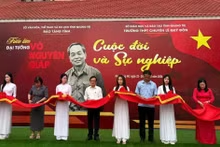
Towards the commemoration of the 115th anniversary of the birth of General Vo Nguyen Giap (August 25, 1911–August 25, 2026), on March 23, at Le Quy Don High School for the Gifted, Quang Tri province organised the thematic exhibition “General Vo Nguyen Giap – Life and Career”.
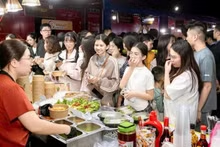
The three-day Pho Festival 2026, held in Thien Truong Ward in Ninh Binh Province, has recorded the strong appeal of Vietnamese pho, while also setting new requirements in organisation and the promotion of heritage values.
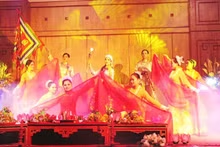
When heritage is viewed not only as a memory of the past but also as a resource for development, the key issue is no longer simply how to exploit it effectively, but how to govern it so that its original value is not eroded in the process of generating benefits. Heritage can generate revenue, attract investment, and spur tourism and services. Yet without long-term vision and scientific control mechanisms, those immediate gains may end up undermining the very foundations of its appeal.
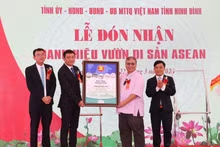
On March 22, the Management Board of Xuan Thuy National Park held a ceremony in Giao Minh Commune, Ninh Binh Province, to receive the title of the ASEAN Heritage Park.
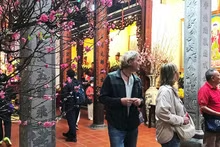
In the new development context, as the demand for green, sustainable growth driven by internal strength becomes increasingly clear, heritage is no longer viewed simply as a “memory of the past” to be preserved in its original state. It is gradually being established as a strategic resource for both the present and the future.
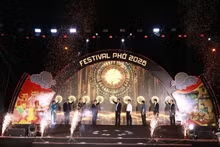
Pho (Noodle soup) Festival 2026, themed “Vietnamese Pho — A Living Heritage in the Modern Era”, officially opened in Ninh Binh Province on March 20. The event not only honours the cultural value of traditional cuisine but also helps affirm the position of Vietnamese pho in the process of international integration, with the goal of becoming a representative intangible cultural heritage of humanity.
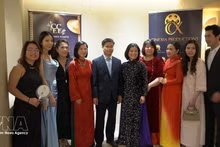
A special cultural event titled “Cinema Night – Bridge of Light” was held on March 16 (local time) at the Club de l’Étoile Cinéma in central Paris, bringing together members of the Vietnamese community and international film lovers.
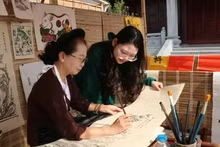
According to information released, the ceremony to add the Dong Ho folk painting craft to UNESCO's List of Intangible Cultural Heritage in Need of Urgent Safeguarding will take place in Bac Ninh Province on March 27.
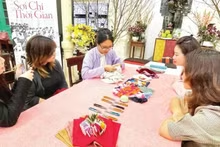
Amid the pace of modern life, needlework and mending skills — once closely associated with generations of Ha Noi women — are being revived through community-based craft practices that foster connection.
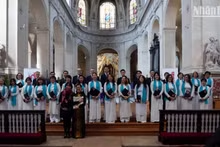
The Que Huong (Homeland) Choir of the Vietnamese community in France performed at the 28th International Choir Festival in Paris on March 15.
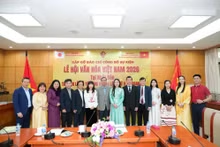
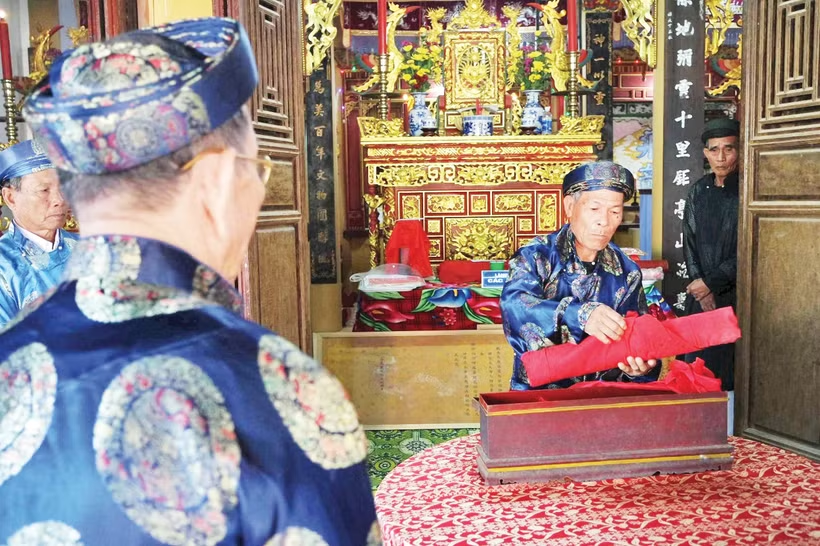
The Hung Kings’ commemoration ritual will be recreated at the 9th Viet Nam Cultural Festival in Japan, helping promote Vietnamese culture and strengthen community bonds among overseas Vietnamese.