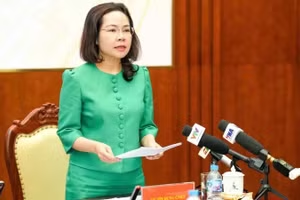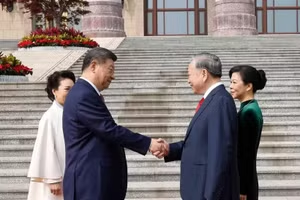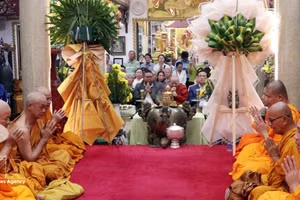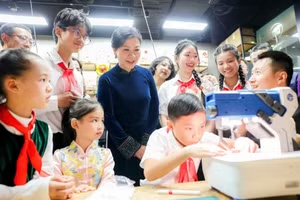
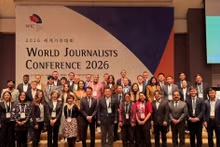
The World Journalists Conference 2026, which was held in the Republic of Korea (RoK) from March 29 to April 3, gathered nearly 50 journalists from 30 countries and territories around the world.
Hai Phong City aims to build itself into one of the country’s leading centres for education and training; in the immediate term, by 2026, it seeks to meet the conditions for recognition as a provincial-level “Learning Community” and to join UNESCO’s Global Network of Learning Cities in 2027.
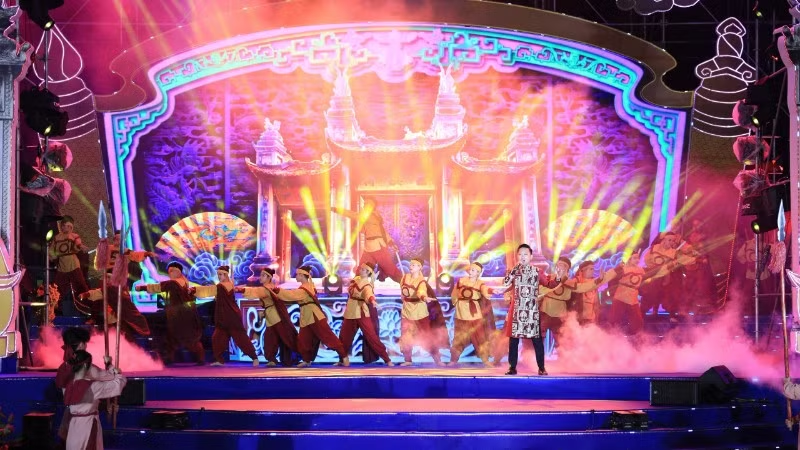
In the final days of March, localities across Ha Noi simultaneously hold festivals commemorating the deity Prince Linh Lang. One of the most important and distinctive celebrations takes place in his homeland at the Special National Relic Site of Voi Phuc Temple in Giang Vo Ward.
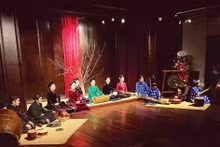
In the heart of Ha Noi’s Old Quarter, the rustic sounds of traditional music quietly resonate, serving as a bridge between past and present. For more than a decade, artists of Dong Kinh Co Nhac (Ancient Music Group of Tonkin) have devoted themselves to preserving these melodies, helping traditional Vietnamese music maintain a lasting presence in contemporary life.
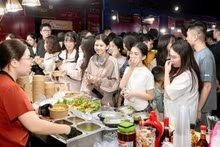
The three-day Pho Festival 2026, held in Thien Truong Ward in Ninh Binh Province, has recorded the strong appeal of Vietnamese pho, while also setting new requirements in organisation and the promotion of heritage values.
When heritage is viewed not only as a memory of the past but also as a resource for development, the key issue is no longer simply how to exploit it effectively, but how to govern it so that its original value is not eroded in the process of generating benefits. Heritage can generate revenue, attract investment, and spur tourism and services. Yet without long-term vision and scientific control mechanisms, those immediate gains may end up undermining the very foundations of its appeal.
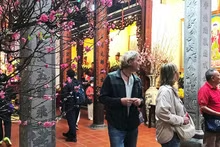
In the new development context, as the demand for green, sustainable growth driven by internal strength becomes increasingly clear, heritage is no longer viewed simply as a “memory of the past” to be preserved in its original state. It is gradually being established as a strategic resource for both the present and the future.
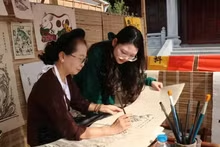
According to information released, the ceremony to add the Dong Ho folk painting craft to UNESCO's List of Intangible Cultural Heritage in Need of Urgent Safeguarding will take place in Bac Ninh Province on March 27.
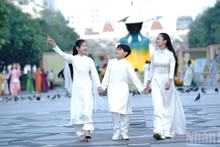
On the morning of March 8, a series of lively activities took place on Nguyen Hue Walking Street in Sai Gon Ward to celebrate the 1,986th anniversary of the Hai Ba Trung Uprising, and the 116th anniversary of the International Women’s Day (March 8).
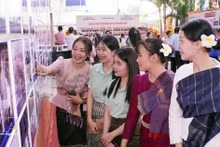
More than 150 documents, photographs and artifacts highlighting the special solidarity among Viet Nam, Laos and Cambodia are being showcased at a thematic exhibition that opened on March 7 at the Lao student dormitory in Xuan Hoa ward, Ho Chi Minh City.
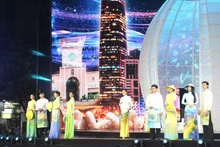
The 12th Ho Chi Minh City Ao Dai Festival 2026 officially opened on March 6 evening, launching a month-long celebration of Viet Nam’s iconic traditional dress under the theme “Golden Threads – Weaving Aspirations”.
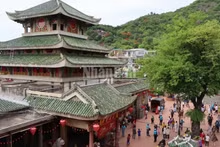
The year 2026 marks the second year since the Ba Chua Xu (The Lady of the Realm) Goddess Festival on Sam Mountain in An Giang Province was inscribed by UNESCO as an Intangible Cultural Heritage of Humanity. The provincial authorities have placed strong emphasis on the organisation of the festival to preserve and promote the heritage while fostering a friendly and civilised image among visitors.
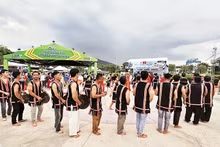
Amid the rhythm of modern life, traditional rituals of the Ba Na and Gia Rai communities in Gia Lai continue to be revived and preserved by local people as a way of affirming their cultural identity.
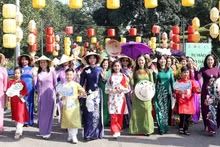
Every March, from bustling cities to rural villages, offices and schools alike are brightened by the many colours and styles of the ao dai (traditional Vietnamese long dress) worn by Vietnamese women. The annual “Ao Dai Week”, launched by the Viet Nam Women’s Union to coincide with International Women’s Day on March 8, not only celebrates the beauty of the traditional costume but also spreads cultural values, creating a festive atmosphere that brings communities together across the country.
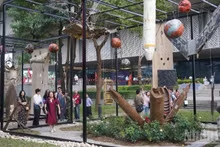
The Ha Noi Department of Culture and Sports and Ha Noi Museum held the opening ceremony for two contemporary art installation spaces entitled “War and Peace” and “Spring Dance” at Ha Noi Museum in Tu Liem Ward, Ha Noi on March 2.
![[In Pictures] Procession of giant “Lord Pigs” weighing over 200kg at La Phu Village Festival](https://en-cdn.nhandan.vn/images/b5fb89d268b54146e00cb575e2a69152e6ef1dee583c512e22232bc588dee416c5987f3c6b4c52e99dea88ec004a141e49009585fa03a6a5ae39823d526fde8a/ruoc-lon-la-phu-11-4212.jpg.avif)
Every year, on the 13th day of the first lunar month, residents of La Phu Village in An Khanh Commune, Ha Noi, hold the traditional“Lord Pig” procession festival. Historical records show that the ritual commemorates the merits of the tutelary deity Tinh Quoc Tam Lang during the reign of the sixth Hung Due Vuong.
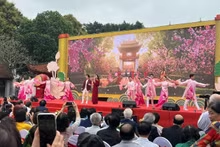
In response to the 24th Viet Nam Poetry Day being observed across the country, Ha Noi hosted its 2026 edition at Van Mieu (Temple of Literature)–Quoc Tu Giam on March 1 (the 13th day of the first lunar month), offering a dynamic programme of cultural and artistic events.
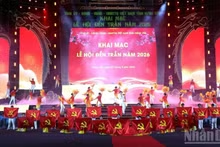
The 2026 Tran Temple Festival opened at the Special National Relic Site Complex of the Tomb and Temple of the Tran Kings (Long Hung Commune, Hung Yen Province) on the evening of March 1.
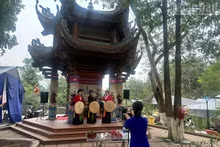
In mid-January, Bac Ninh comes alive with the festive season. The Lim Festival in the Year of the Horse 2026 has continued to attract large numbers of local residents and visitors from across the country, while also leaving its mark through increasingly civilised and modern organisation, particularly the effective use of digital media to promote and disseminate the values of quan ho heritage.
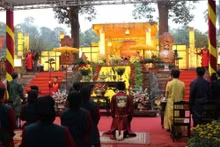
As part of the series of activities celebrating the Lunar New Year 2026 at the heritage site, the spring incense offering ceremony at the Thang Long Imperial Citadel combined royal court traditions with elements of traditional folk festivals, expressing wishes for a smooth and prosperous start to the new year.