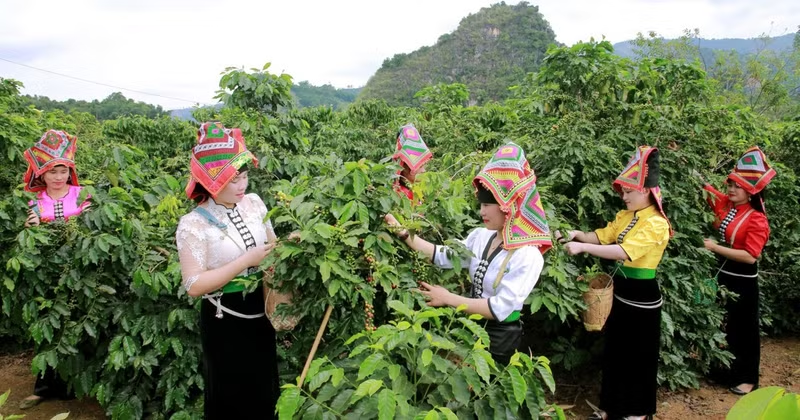
In Son La, high mountainous terrain, a distinctive climate, and significant day-to-night temperature variations provide favourable conditions for Arabica coffee to grow and develop its flavour. From just 278 hectares planted with Arabica coffee in 1980, the province has expanded its cultivation area to more than 44,000 hectares, with annual output reaching nearly 51,000 tonnes of green coffee beans. Son La has now become the country’s largest Arabica-growing region, making an important contribution to the agricultural economy, creating jobs, and increasing incomes for people in mountainous areas. Through production, processing, and market development, Son La coffee has gradually established its position, becoming an agricultural product capable of competing in both domestic and international markets.
However, as markets increasingly prioritise quality, transparency of origin, and environmental responsibility, expanding cultivation areas and boosting output are no longer the sole objectives. The challenge is to shift from extensive growth towards improving quality, efficiency, and added value, while reorganising production along value chains so that coffee growers receive a fairer share of the benefits in return for their labour and the calibre of their products.
Once a crop that helped green barren land and hills while providing livelihoods for people in mountainous areas, Arabica coffee is now becoming one of Son La’s key agricultural products.
One longstanding weakness in Son La’s coffee-growing areas has been the practice of harvesting indiscriminately, mixing green and ripe cherries, and selling mainly raw materials. This approach has resulted in inconsistent quality, low product value, and greater vulnerability among producers to market fluctuations. The establishment of cooperatives, cooperative groups, and production linkages has helped to address these shortcomings, gradually bringing cultivation, harvesting, and preliminary processing practices into a more systematic framework.
Developing cultivation areas while maintaining quality control has been identified as a consistent priority.
Vu Viet Thang,
Director of Phuc Sinh Son La Joint Stock Company
Alongside the standardisation of cultivation areas, deep processing is a key lever to increase the value of Son La’s Arabica coffee beans. Rather than relying primarily on exports of raw materials, businesses and cooperatives are investing in technology, diversifying products, gradually building brands, and reaching international customers directly. Director of Phuc Sinh Son La Joint Stock Company Vu Viet Thang said that developing sourcing areas in conjunction with quality control had been identified as an ongoing priority. The company focuses on every stage, from seed selection and plantation care to harvesting, to ensure consistent coffee quality and flavour. Partnerships with farming households enable the company to secure its raw material supply more effectively while helping to standardise production processes step by step.
At Bich Thao Coffee Cooperative, efforts are focused on renovating plantations, introducing new varieties, and investing in processing technology. Having recognised that some long-established coffee orchards had aged, with declining yields and inconsistent bean sizes, the cooperative proactively adopted purebred THA1 and Catimor varieties for propagation and grafting to rejuvenate existing trees. It has also encouraged farmers to adopt organic cultivation methods and selective harvesting. Bich Thao Coffee Cooperative’s products earned recognition at the Golden Coffee Awards 2025 and won a gold medal in 2026 from the German Roasters Association. Since 2023, the cooperative has directly exported batches of speciality coffee to Germany, the UK, France, Japan, and the Middle East.
Director of the cooperative Nguyen Xuan Thao said it had also invested in a colour-sorting system, roasting and grinding lines, and a closed-loop processing facility with a capacity of 20 tonnes of green coffee beans per day. Using a controlled raw material supply as its foundation, the organisation has developed a range of products, including speciality coffee, roasted and ground coffee, freeze-dried instant coffee, and Cascara tea made from ripe red coffee cherries.
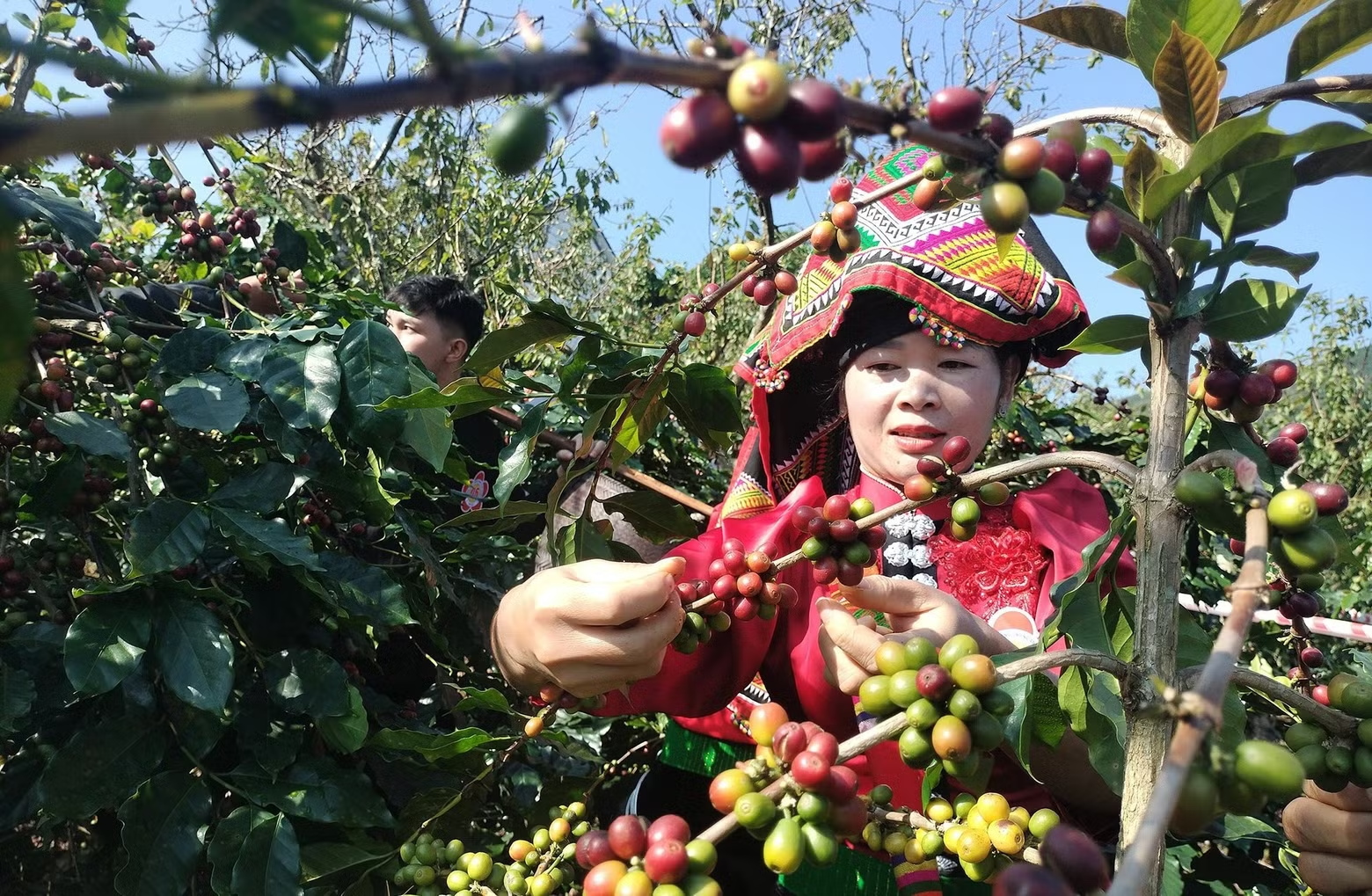
In 2017, Son La coffee was granted geographical indication status, providing an important basis for protecting the product’s reputation and enhancing its brand value. To date, Son La has established two high-tech coffee production zones in Mai Son and Thuan Chau, covering more than 1,000 hectares, and expanded cultivation areas certified under 4C, UTZ, Rainforest Alliance, and Organic standards. The area devoted to speciality coffee has reached over 1,100 hectares, with output of approximately 1,000 tonnes of green coffee beans. These achievements have laid the foundation for Son La to participate more deeply in the high-quality coffee segment.
Vice Chairman of the Son La Provincial People’s Committee Nguyen Thanh Cong said that international markets were extending their requirements for agricultural products beyond the quality of finished goods to encompass the entire production process. This makes it necessary to develop coffee-growing areas in ways that conserve resources, protect soil and water, reduce environmental impacts, and adapt to climate change. Given Son La’s steep terrain, choosing tailored cultivation methods is particularly important for preventing soil degradation and maintaining long-term productivity.
According to Vice Chairman of the Son La Provincial People’s Committee Nguyen Thanh Cong, the province will continue to focus on building a sustainable coffee ecosystem, updating data on growing areas, ensuring information transparency, and strengthening traceability. Agroforestry models, coffee cultivation under shade trees, the use of organic fertilisers, and water-saving irrigation methods should continue to be studied and replicated in ways suited to the conditions of each locality. At the same time, the application of science and technology in managing cultivation zones needs to be stepped up; farmers should be supported in accessing new varieties with high yields, good quality, and strong disease resistance; and cooperatives’ capacity to organise production should be enhanced. Changes in cultivation methods must go hand in hand with technical guidance and market linkages to prevent the costs of complying with new standards from becoming a burden on farming households.
Nguyen Thanh Cong added that the goal was to develop an Arabica-growing region distinguished by quality and identity, with the capacity to adapt to future challenges. The aim is not simply to sell more coffee, but also to ensure that the value generated is shared with farmers. To realise this vision, stronger coordination among regulators, businesses, cooperatives, scientists, and producers is essential. Planning for growing areas must also be aligned with market demand, while deep processing, protection of geographical indications, and brand development based on genuine quality should be promoted.
From a crop that helped green barren land and hills to an agricultural commodity now reaching numerous international markets, Son La’s Arabica coffee is poised to enter a new phase of development driven by quality and added value. By placing green production, value-chain linkages, and farmers’ interests within a unified strategy, Son La coffee will gain a stronger foundation for enhancing its competitiveness, achieving sustainable growth, and affirming the standing of Vietnamese agricultural products on the global market.